
Gratin dauphinois possesses an undeniable comfort factor. Its aroma evokes home, the warmth of a dish fresh from the oven, and the effortless glide of a spoon. Yet, many cooks falter with this classic dish due to a simple mistake: adding too much cream at the wrong time.
Classic Dish Deserving More Than Just a Cream Bath
Gratin dauphinois doesn’t need to be submerged to be delightful. In fact, an excess of liquid can disrupt its balance, resulting in a greasy top and a still-firm center.
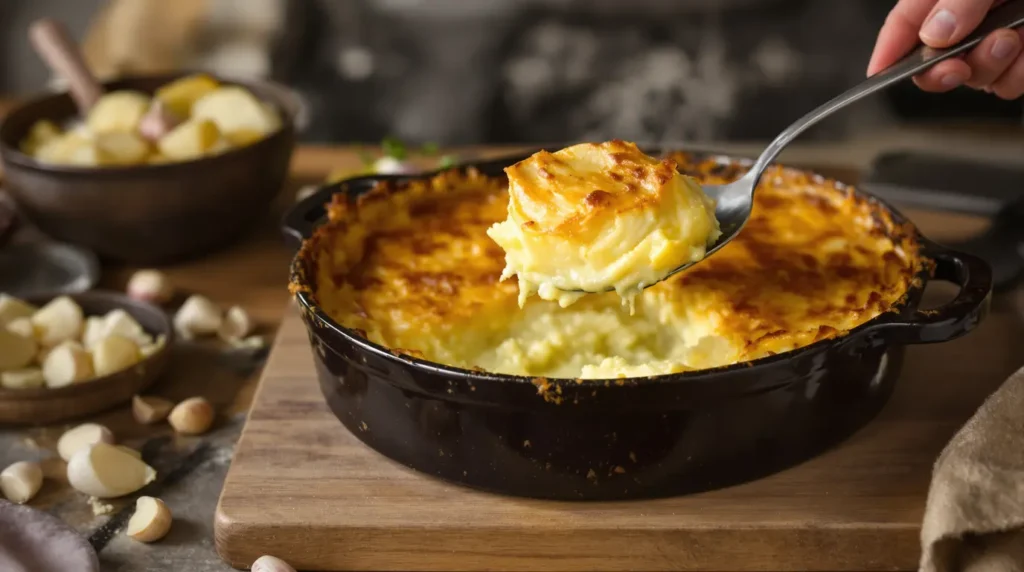
This dish originates from a humble kitchen, designed to nourish with minimal ingredients, highlighting a genuine play of textures. The potatoes should melt softly without disintegrating, and the cream should envelop them, not conceal them.
This is where everything changes. The secret isn’t in adding more cream, but in distributing it more effectively.
The Gesture That Makes All the Difference
The ideal approach is strikingly simple. Instead of pouring all the cream at once over the neatly arranged potatoes, you should coat the slices before cooking.
Why is this so crucial? Because the cream penetrates better between the slices when they are already mixed. Each piece receives a bit of binding, resulting in a more tender, cohesive gratin that holds together during cutting.
This gesture may seem trivial, but it transforms the dish entirely. It’s akin to dressing a salad at the last moment versus seasoning each leaf individually—the outcomes are worlds apart.
Easy Recipe for Four People
Here’s a straightforward, generous version that stays true to the spirit of gratin dauphinois. You’ll achieve a tender dish without an overload of cream.
Ingredients
- 1 kg of waxy potatoes, such as Charlotte or Amandine
- 400 ml of heavy cream
- 200 ml of milk for a slightly lighter version
- 2 cloves of garlic
- 1 pinch of grated nutmeg
- 1 generous pinch of salt
- Black pepper, to taste
- 20 g of butter for the dish
Preparation
- Preheat your oven to 160 or 170 °C.
- Peel the potatoes and slice them thinly, about 2 to 3 mm. The more uniform the slices, the more even the cooking.
- Rub the dish with a halved garlic clove, then generously butter it.
- In a large bowl, mix the cream, milk, salt, pepper, and nutmeg.
- Add the potato slices to this mixture and gently toss with your hands to ensure they are well coated.
- Layer the slices in the dish, slightly overlapping them.
- Pour any remaining mixture over, but be careful not to drown them.
- Bake for 1 hour 15 minutes to 1 hour 30 minutes, until the potatoes are tender and the top is beautifully golden.
When you insert a knife in the center, it should slide in effortlessly. That’s the sign that it’s ready.
Why This Method Works So Well
In gratin dauphinois, contact is everything. The potatoes are thick, dense, and sometimes a bit temperamental. If the cream settles at the bottom of the dish, it won’t work its magic throughout.
By coating the slices before assembly, you ensure a more uniform cooking process. The slices cook together, absorbing the mixture rather than pushing it away. The gratin becomes softer without being heavy.
Moreover, this technique has an added benefit: when cutting, the layers hold together better. The dish looks neater, more appetizing, and visually appealing. You’ll find yourself going back for seconds, and often you will.
Common Mistakes That Ruin a Gratin
The first mistake is cutting the potatoes too thick. They struggle to cook through, leading to a gratin that appears ready on the surface but remains firm inside.
The second error is pouring too much liquid after assembling the dish. While it may seem like a good idea, it results in a mushy gratin. The liquid should be evenly distributed from the start.
The third mistake is cooking at too high a temperature. An overly hot oven can brown the top too quickly, leaving the center uncooked. A gentle, prolonged cooking process is preferable.
Can the Recipe Be Lightened Without Compromising It?
Yes, indeed. You can substitute part of the cream with milk. The gratin will remain delicious, though it will be a bit lighter in richness.
However, if you desire a truly tender result, it’s better to stick with heavy cream. The texture plays a significant role here, providing that enveloping quality we expect from a good gratin dauphinois.
And please, avoid adding cheese if you want to maintain tradition. Cheese alters the dish, steering it closer to a gratin savoyard, with a different identity and flavor profile.
A Simple Dish, Never Mundane
The beauty of this gratin lies in its unpretentiousness. It relies on just a few ingredients but requires a bit of care. This is often how the best everyday dishes are born.
So, if you’ve ever experienced a gratin that was dry or too soupy, give this method a try. Coat those slices. Take the time to arrange them properly, and you’ll notice the immediate difference.
And when it’s time to serve, pay attention to the expressions around the table. There’s often that telling silence that follows the first bite—the kind that speaks volumes without a single word.