
In peak season, scallops are a sensation until the dreaded moment of cooking. In 2026, chefs reveal the 3-1 rule for a crusty, pearly result every time.
Scallops are one of those products that everyone agrees on for a chic dinner, but they also make home cooks tremble in front of the pan. Too often, people turn them into rubbery little soles out of pure zeal.
However, an ultra-simple trick is circulating among chefs: the 3-1 technique. It is a matter of minutes, a well-browned face, and a barely cooked heart that changes everything on the plate.
Why scallops handle guesswork so poorly
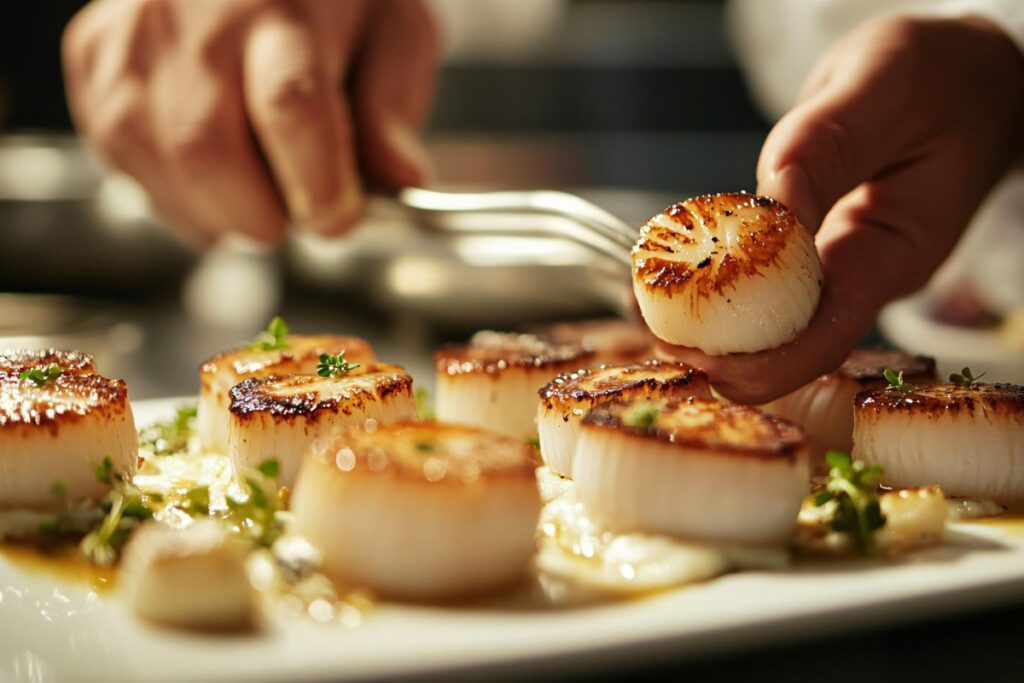
Scallop meat is very fine and does not forgive mistakes. Prolonged cooking gives that rubbery effect that ruins the sensory experience. The goal is clear: obtain a slightly crispy, golden crust and a melting, almost pearly heart.
Classic techniques suggest searing them for two minutes on each side. In reality, between the time it takes to place them and the hesitation over color, you quickly exceed four minutes and overcooking sets in.
The 3-1 technique explained, minute by minute
The principle is child’s play: sear the scallops for three minutes on one side, then one minute on the other, in a very hot pan. Beyond five minutes of total cooking, the probability of overcooking explodes, making this 3-1 format particularly safe.
How to master it:
- Place your well-patted dry scallops in a smoking hot pan with a little fat.
- After one minute, the edges start to whiten.
- At two minutes, the brown coloration appears on the contact side.
- At three minutes, the crust is well-formed: it is time to flip.
- The final minute on the other side heats the heart without drying it out.
To respect the timer, an expert tip is to thread several scallops onto a wooden skewer to flip them all in one gesture.
The alternative: raw scallops
If you have ultra-fresh scallops, they are a delight in carpaccio, sushi, or sashimi. Tasting them raw provides a valuable reference point for that soft firmness and briny sensation that you must preserve when using the 3-1 method.
By visualizing this starting texture, it becomes easier to trust a short cooking time and a very hot pan. Let the 3-1 technique reveal the best of the scallop without ever over-handling it.