
Fruit oxidation may seem inevitable, especially with fragile fruits like bananas. But with the right products, you can slow down this process. And good news: the one we prefer is probably already in your refrigerator
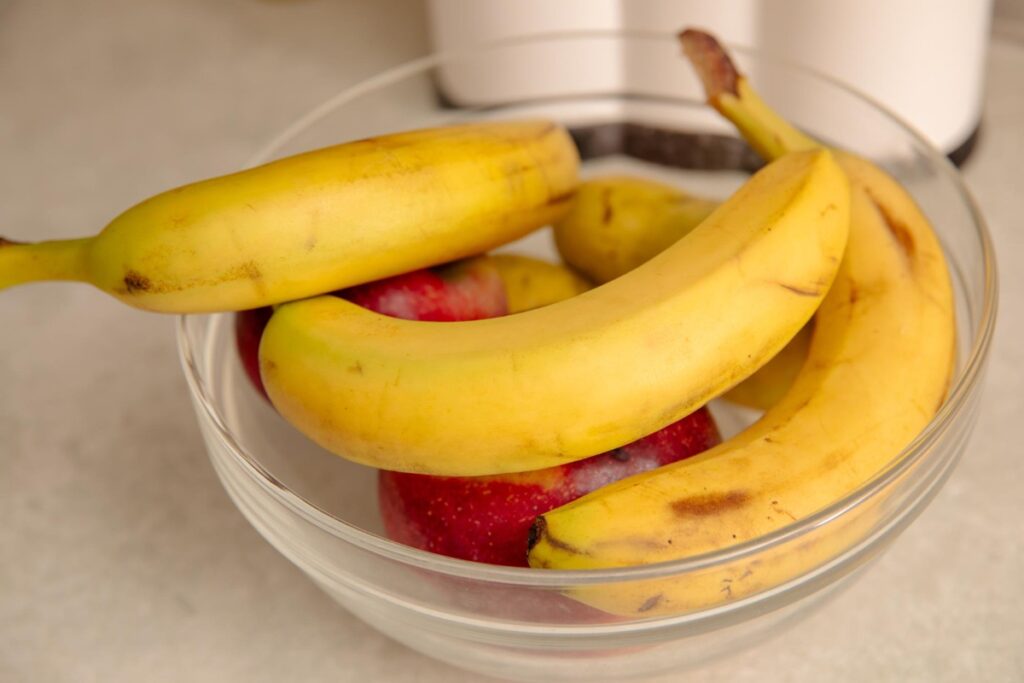
Who hasn’t been frustrated to see a banana freshly sliced turn brown in a few minutes? This phenomenon, called oxidation, occurs when the fruit’s flesh comes into contact with the air. This reaction is natural, but for those who like to prepare smoothies, fruit salads, or snacks in advance, it can quickly become a real problem.
Fortunately, there are ultra-effective methods to slow down this process. By applying them, you can enjoy your fresh fruit pieces longer without fearing the appearance of unappetizing brown spots.
This product present in your refrigerator can slow down the oxidation of your bananas
No need to buy hard-to-find foods at the supermarket to avoid the oxidation of your banana pieces. Indeed, according to many experts, a drink that our children are used to drinking for a snack or breakfast does the job very well. It is fruit juice. And yes, it is as simple as that.
As surprising as it may seem, by covering your bananas with this beverage, you considerably slow down their browning. The natural acids present in the fruit juice act as a protective barrier. To put this tip into practice, we nevertheless recommend using citrus juice.
Lemon, grapefruit, or orange juices are perfect for guaranteeing the freshness of your banana pieces for longer. After cutting your fruit into slices, soak them sparingly with a brush previously dipped in the juice. Then, all you have to do is arrange them in a container and place them in the refrigerator.
What is the other ultra-effective trick to prevent your bananas from oxidizing?
Is there no citrus juice left in your fridge? No problem. Another liquid can also help you delay the oxidation of your bananas. You can add fruit syrup to your banana pieces instead.
By coating your banana slices with a little syrup (such as strawberry, raspberry, or red fruit syrup), you create a protective layer that limits contact with the air and slows down browning. The only downside: this ingredient is high in sugar.