
When grilling, almost everyone leaves the lid open and cranks the heat to the max. For a pro, this reflex ruins the meat and has consequences for your health.
It is an ultra-familiar scene: the sun is shining, the barbecue is heating up, and everyone is hungry. In front of the grill, almost everyone has the same automatic reflex: you open the lid wide, push the fire to the limit, and stay mesmerized by the flames.
For an expert, this common gesture is a culinary “sacrilege.” This simple open-lid reflex might actually be the number one mistake at the barbecue, ruining your food without you even realizing it.
The open-lid mistake that makes pros cringe
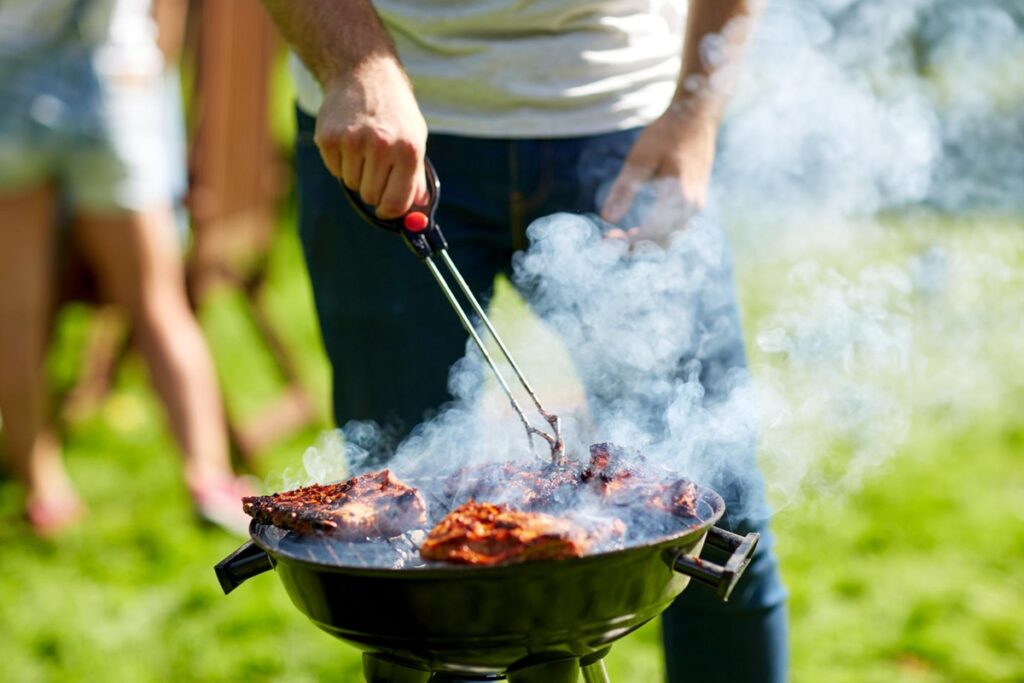
The typical scene is always the same: glowing charcoal, flames licking the grill, and the lid stuck in the open position to “keep an eye” on the sausages. The result is that the meat cooks in direct heat at maximum temperature.
Experts from the uk bbq school remind us that “the most common mistake is cooking at the wrong temperature.” When it’s too hot, the outside burns while the inside remains raw.
Furthermore, direct flames promote the formation of harmful compounds like polycyclic aromatic hydrocarbons, which are not recommended for your health.
Close the lid and control the heat: the pro method
The fundamental principle is clear: a barbecue with a lid should be managed with the lid closed, regardless of the model. The grill then becomes an outdoor oven where heat circulates around the food, flare-ups are reduced, and the meat remains much more tender.
Mastering temperature ranges changes everything:
- 195 to 265 °f: for slow cooking and smoking.
- 350 to 430 °f: for indirect cooking of large pieces.
- Over 460 °f: for foods that cook in less than 20 minutes.
- Around 570 °f: for pizzas.
Use a thermometer and a two-zone fire
Another weapon against the open-lid habit is the digital thermometer. Professionals suggest aiming for an internal temperature of 131 °f for a juicy steak, 160 °f for pork, and 162 °f for poultry.
A probe placed in the center of the meat avoids the need to lift the lid every two minutes or cut the meat “to see” if it’s done.
Finally, master the fire. Experts recommend a two-zone fire: plenty of charcoal on one side for direct searing, and no embers on the other for indirect cooking and resting. Always wait for red embers without flames before starting, and remember to clean your grill after each use.
A dirty grill adds a bad taste and unhealthy smoke, whereas a simple brushing while hot is enough to keep things professional.