
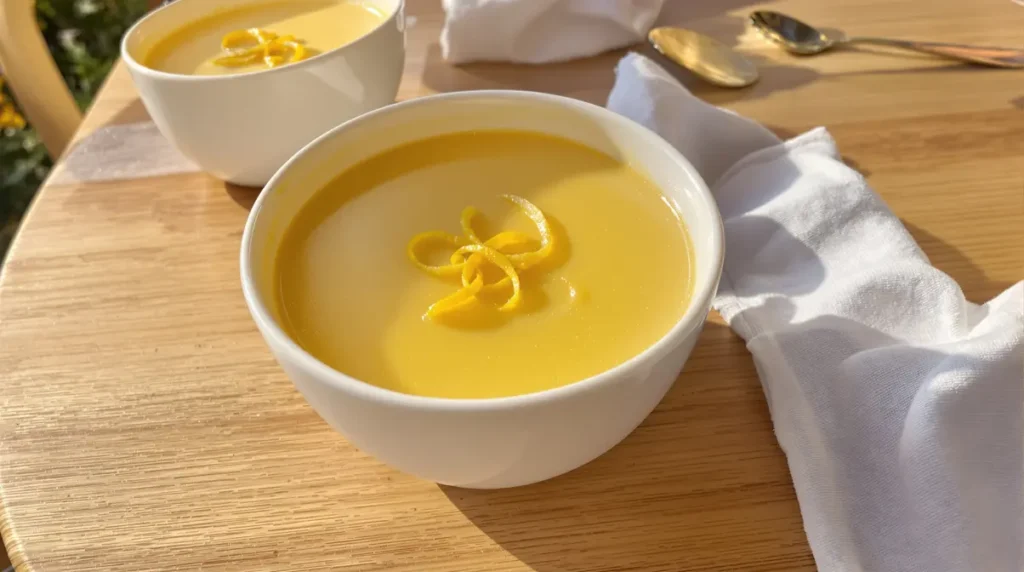
Lemon custard: a fresh, simple, and quick delight
In under 20 minutes of preparation, you can create a creamy and light dessert that will impress your guests. With just a few precise steps, you can master this recipe effortlessly. Are you ready to wow your friends tonight?
Why this recipe is so simple
The beauty of this dish lies in its simplicity. It requires few ingredients, no industrial thickeners, and accessible techniques. Just heat, mix, and monitor. The lemon zest lightens the richness of the milk and eggs, resulting in a refreshing and easily digestible dessert.
Traditional alsatian cheese tart: grandma’s recipe finally revealed
Say goodbye to the ice cream in your freezer: a simple and foolproof trick for a clean, efficient, and frost-free appliance. Making homemade brioche is no longer a dream: this impressive, ultra-simple recipe is accessible to everyone.
Ingredients for 4 ramekins
- 3 whole eggs
- 500 ml of milk (whole for creaminess or semi-skimmed)
- 80 g of granulated sugar (or 60 g for a less sweet dessert)
- 1 untreated lemon: finely grated zest + 40 ml of juice
- 1 teaspoon of vanilla extract (optional)
- A pinch of salt
- Optional indulgence: substitute 100 ml of milk with 100 ml of heavy cream
Step-by-step recipe, ready in under 20 minutes
Gather your materials within reach. This recipe moves quickly but demands attention. If possible, use warm ramekins to ensure even cooking.
Prepare the lemon and milk. Rinse and dry the lemon. Grate 1 teaspoon of zest, avoiding the white pith. Squeeze to obtain about 40 ml of juice. Pour 500 ml of milk into a saucepan. Add the zest, vanilla, and a pinch of salt. Heat over low until steam rises, but do not let it boil.
Mix the eggs and sugar. In a bowl, crack the 3 eggs and add 80 g of sugar. Whisk gently for 1 to 2 minutes until slightly frothy, primarily to dissolve the sugar without incorporating too much air.
Temper the eggs. Remove the milk from heat. Strain if necessary to remove large zest pieces. Slowly pour the warm milk into the eggs while whisking continuously. This gradual process prevents the eggs from curdling, keeping the mixture smooth.
Add the lemon juice. Let the mixture rest for 2 minutes. Gradually incorporate the 40 ml of lemon juice while stirring. The lemon infuses flavor without causing curdling. If using alcohol, wait before adding it.
Cooking options
Option 1: Oven cooking (bain-marie)
Preheat the oven to 150°C (300°F). Pour the custard into 4 ramekins. Place them in a larger baking dish, adding hot water until it reaches halfway up the sides of the ramekins. Bake for about 25 minutes until the top is set and the center is slightly wobbly. This method is the gentlest.
Option 2: Quick stovetop cooking
Return the mixture to a clean saucepan. Heat over very low heat, stirring constantly with a spatula. In 5 to 8 minutes, the custard will thicken and coat the back of the spoon. Remove from heat immediately and pour into ramekins. This method can be completed in less than 20 minutes of active time.
Cooling, texture, and storage
Allow to cool for 15 to 20 minutes at room temperature, then refrigerate for at least 1 hour. The custard will firm up as it cools. If it appears too liquid after cooking, give it time in the fridge. These custards can be stored covered in the refrigerator for up to 48 hours.
Ideas for variations
- Exotic twist: Replace 100 ml of milk with 100 ml of coconut milk.
- Adult version: Add 1 tablespoon of limoncello after cooking.
- Serve with crushed cookies (speculoos, shortbread) for added crunch.
- Pair with fresh berries for a complementary tartness.
- Reduce sugar to 60 g if you prefer less sweetness.
Five mistakes to avoid for success
- Do not boil the milk with the zest; high heat gives a cooked taste.
- Never pour boiling milk directly onto the eggs; always temper them.
- Avoid adding lemon juice to boiling milk, as it may curdle.
- Do not cook over high heat on the stovetop; the custard should remain below boiling.
- Do not serve the custard too hot; the lemon flavor shines better when chilled.
With these guidelines, your lemon custard becomes an elegant and quick dessert. Simple to make, it will impress without stress. Will you give it a try tonight?
About the author
Emma Bellanger is an expert in French gastronomy and culinary news, passionate about the world of taste. She guides food enthusiasts in discovering authentic recipes and trends. Emma combines in-depth knowledge, an eye on new developments, and insightful advice to offer a selection of enriching content tailored for both amateur and professional cooks in the realm of French cuisine.