
Transform your asparagus: a Simple guide to irresistible spring flavors
Have you ever been served asparagus that is stringy and tough, leaving you wondering where the magic of spring has gone? A farmer once shared a simple yet transformative tip that can elevate ordinary asparagus to a delightful dish. With just three minutes of careful preparation, you can turn these greens into a culinary sensation.
Why your asparagus often turns stringy
The unpleasant texture of asparagus rarely stems from the vegetable itself. More often, it is a result of missteps in the kitchen that we assume are harmless:
- Tough skin on white or purple varieties.
- Uneven or vigorous cooking: the tip cooks faster than the base.
- Cooling at room temperature, which continues the cooking process and softens the tip.
Three common mistakes frequently occur: failing to peel when necessary, submerging in boiling water, and allowing the stalks to cool without stopping the cooking. These errors contribute to that infamous stringy texture.
The farmer’s advice: focus on the stalk, not just the tip
The key lesson here is both simple and somewhat counterintuitive. While the delicate tip deserves protection, the stalk needs your attention.
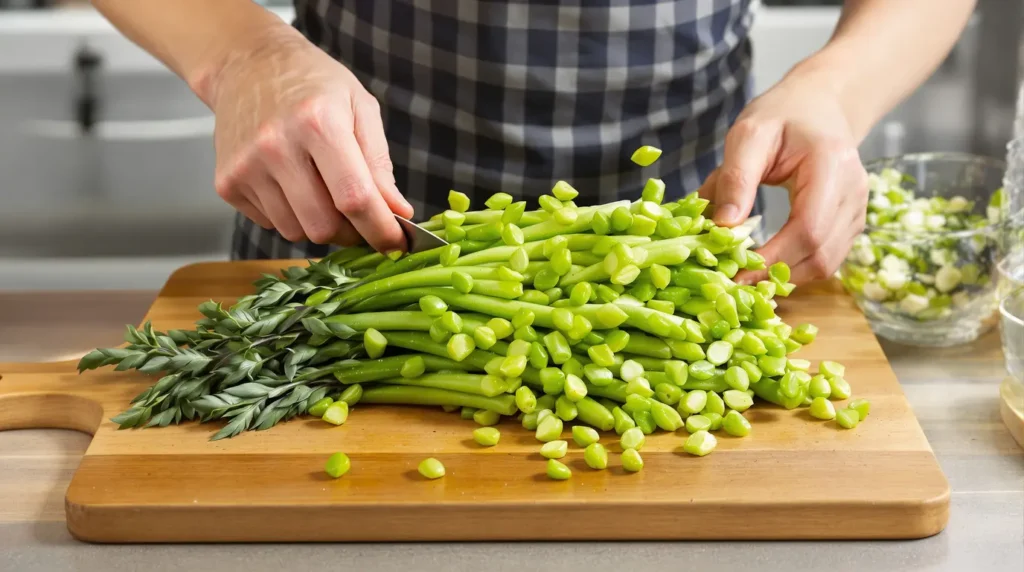
- Peel lightly from the middle towards the base. Remove only the thin outer layer that becomes fibrous. For thick white or purple asparagus, this peeling is essential. For very thin and fresh green asparagus, minimal peeling, or none at all, will suffice.
- Snap or cut off the tough end. If some stalks are significantly thicker, trim them slightly for even cooking. Avoid scratching the tips; if they’re damaged, they may disintegrate during cooking.
The one-minute cooking method: simmering, salting, and icy bath
Once your stalks are prepped, it’s time for a gentle, controlled cooking process. The goal is even cooking, not a harsh thermal shock.
- Use water that is simmering and salted instead of boiling aggressively. Simmering heats evenly and prevents the asparagus from clashing against each other.
Cooking Times Based on Thickness and Color:
- Thin green asparagus: 2 to 3 minutes.
- Thick green asparagus: 4 to 6 minutes.
- White or purple asparagus: 6 to 8 minutes, or longer depending on size.
To test for doneness, pierce the base with the tip of a knife; the stalk should yield without tearing. As soon as they’re done, plunge the asparagus into an ice bath (cold water with ice). This thermal shock halts the cooking and preserves the vibrant color.
Quickly drain them on a clean towel or paper towels; soggy asparagus loses its texture and flavor.
Quick recipes and dressings
Lemon Butter Sauce
Simple, classic, and perfect for showcasing the asparagus.
- Ingredients: 60g butter, 1 tablespoon lemon juice, a pinch of salt.
- Preparation: Melt the butter over low heat. Add lemon juice and a pinch of salt. Drizzle over the asparagus just before serving.
Light Mustard Vinaigrette
Ideal for a fresh starter or spring salad.
- Ingredients: 3 tablespoons olive oil, 1 tablespoon white wine vinegar, 1 teaspoon Dijon mustard, salt, and pepper.
- Preparation: Whisk together all ingredients and pour over warm or cold asparagus.
Soft-Boiled Egg (for garnish)
- Ingredients: 1 egg per person.
- Cooking: Place the egg in simmering water for 6 minutes. Remove and transfer immediately to the ice bath for 2 minutes. Peel gently and serve sliced atop the asparagus.
Waste-Not: flavorful broth from trimmings
Don’t discard the peels and tough ends, they can be used to make a delicate broth.
- Combine the trimmings (approximately 300-500g) with 1 liter of water.
- Add a bay leaf and a few parsley stems. Simmer for 20 minutes, then strain.
This broth can serve as a base for risottos, light soups, or sauces.
Quick reminders before serving
- Lightly peel from the middle towards the base, keeping tips intact.
- Cook in simmering water, not a vigorous boil.
- Immerse immediately in an ice bath.
- Drain quickly and season just before serving.
These straightforward techniques take just a few moments but can transform a simple bunch of asparagus into a dish that disappears in no time. Why not try it out this week?