
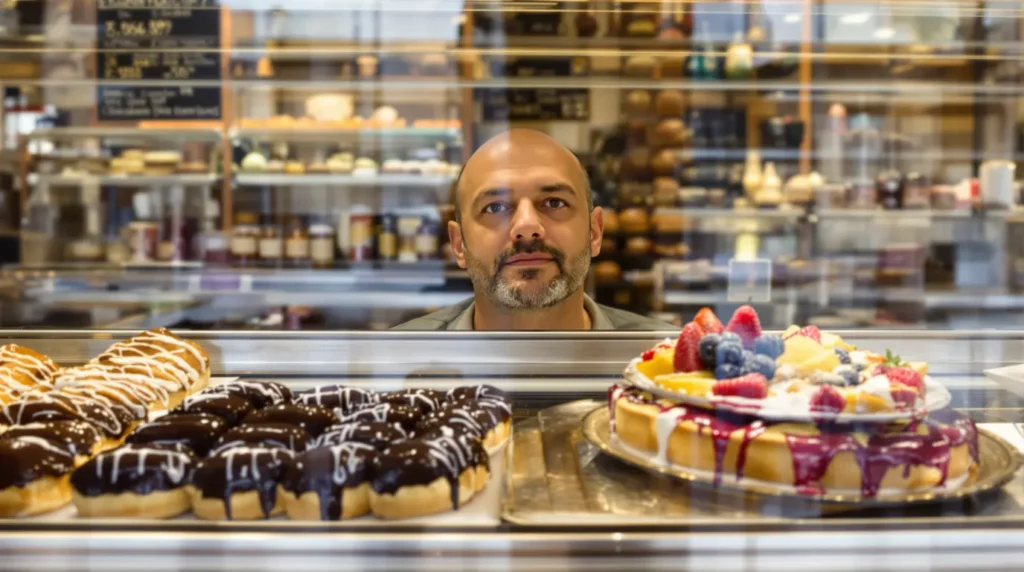
The art of patisserie: how to identify homemade treats
As a professional in the bakery industry, I witness daily the allure that pastry displays hold for passersby. Many customers frequently question whether those éclairs or tarts are crafted on-site or merely plucked from a frozen box. Here’s the essential tip, and a few other straightforward signs, to help you discern the truth without any missteps.
The ongoing dilemma
This debate resurfaces time and again. In 2023, a striking statistic emerged: only 1% of pastries were reported to be “homemade.” While this claim has been contested and its sources questioned, the notion has lodged itself in public consciousness. Today, many establishments blend artisanal elements with industrial components, leaving consumers to wonder about the authenticity of their treats.
The reality is more nuanced. Some pastries are entirely made on-site, while others are assembled from components prepared elsewhere. Additionally, some arrive fully prepared, often frozen. To the untrained eye, all that glitters behind the glass may seem equally enticing.
What the law says, and doesn’t say
French regulations mandate transparency to prevent consumer deception. Article R112-14 of the Consumer Code, for instance, requires that the state of a product be disclosed if failing to do so could mislead customers. This applies primarily to items that are “frozen,” “chilled,” or “defrosted.”
However, the crafting of pastries lacks the same stringent regulations that govern bread production. In other words, a bakery isn’t obligated to declare whether its goods are “homemade” or “assembled from industrial elements” unless the absence of such information could clearly mislead the customer.
Visual clues to look for in the bakery
Visible Lab: An open workshop behind the display often indicates genuine on-site production. You can watch the staff kneading, rolling, and filling.
Limited Quantities: A small selection of items that are frequently replenished throughout the day suggests artisanal production.
Seasonal Offerings: Changing recipes aligned with the seasons or occasional special launches are strong indicators of homemade creations.
Natural Irregularities: Slightly varied shapes, imperfect glazes, or uneven layers hint at manual craftsmanship.
Large Freezers: If you spot sizable freezers or pallets of industrial packaging behind the counter, be cautious, these may signal frozen products.
Labeling: Check the labels on packaging or near pricing. A product marked “defrosted” should clearly state as much.
Signs you can smell and taste
The scent of fresh butter, warm caramel, or zesty citrus often suggests a pastry made on-site. Conversely, an overly neutral aroma can indicate an industrial product that has merely been reheated.
Texture is also telling. A crispy mille-feuille that is crunchy on the outside and moist inside suggests recent preparation. If everything is uniformly soft or sponge-like, it’s likely that the pastry has been frozen and then thawed.
Questions to ask the staff
“Do you make the cream/paste/filling here?”, A simple, direct inquiry.
“Do the products arrive frozen or ready to assemble?”, This prompts transparency.
“What time are the pastries prepared?”, A specific answer often reflects care in production.
Most staff members will respond honestly. If their answers are vague, it’s wise to be cautious.
Your pre-purchase checklist
Display: Is there a visible lab?
Variety: Are there new or seasonal products?
Quantity: Are items limited or displayed in bulk?
Aroma: Is there a fresh-baked scent?
Labeling: Are “defrosted” or “frozen” labels visible?
Choosing with confidence
While you may not always receive a definitive answer, combining these indicators, visibility of the laboratory, scent, texture, labeling, and straightforward questions, greatly enhances your chances of purchasing a pastry genuinely made on-site. If you favor artisanal goods, seek out establishments that offer limited quantities and seasonal items.
Finally, never hesitate to ask questions. A brief exchange with the staff can often yield the most insightful answers. After all, a pastry is not just a treat; it’s a story that the bakery should be eager to share.