
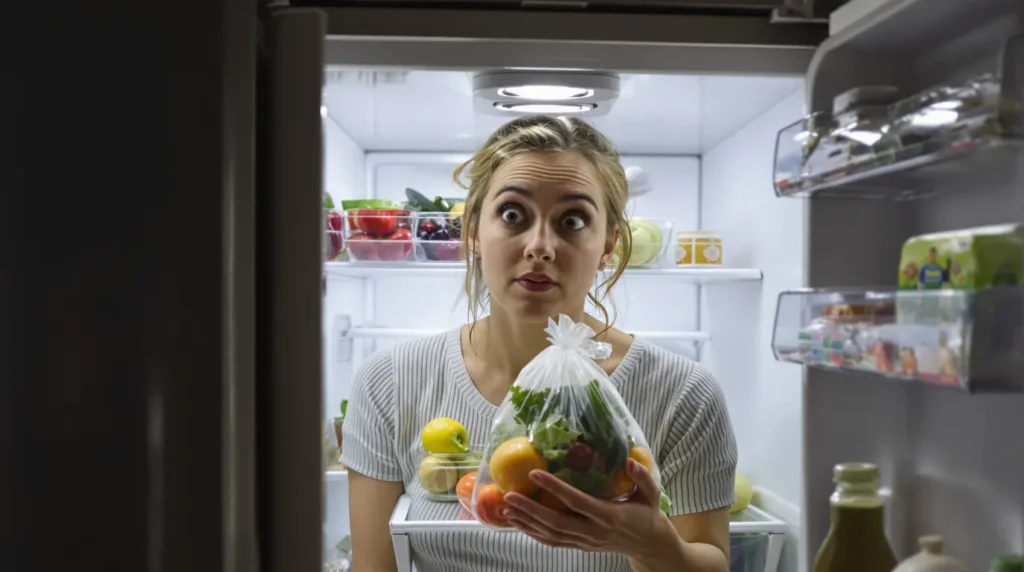
Extend the life of your greens with a simple trick
As you unpack your groceries, you might find yourself sliding a head of lettuce into a tiny plastic bag. After tying a knot, you might be dismayed to discover that your salad has wilted within just two days. The good news? A simple adjustment can significantly extend the life of your vegetables and help you save money.
Why does your Lettuce wilt so quickly?
Lettuce continues to “live” after it’s been harvested. It breathes, consuming oxygen while releasing carbon dioxide and water vapor. When you seal it tightly in a plastic bag, the moisture condenses inside, causing droplets to form on the leaves. This excess moisture leads to quicker spoilage and mold growth.
Without sufficient oxygen, lettuce can even ferment, resulting in a strong odor and a bitter taste. Fruits like apples and bananas release ethylene gas, which accelerates the ripening of nearby vegetables. According to ADEME, households waste between 44 and 66 pounds of food per person each year, costing nearly $100 annually. This is a significant impact on your budget.
The simple gesture that changes everything
The good news is that the solution is likely already in your kitchen: the produce bag from the supermarket. Here’s how to use it to keep your lettuce fresher for longer:
Wash the Lettuce: Rinse it thoroughly and then spin it dry. The leaves should be damp but not soaked.
Turn the Bag Inside Out: Place the seams facing outward to prevent moisture from clinging to the leaves.
Insert the Lettuce: Place the dried lettuce inside the bag, gently pressing to release some air.
Do Not Tie a Knot: Instead, simply fold the opening under the lettuce or tuck it in. This creates a sort of cap.
Store in the Crisper Drawer: The plastic will retain some moisture while allowing excess water and gases to escape.
What to expect
The results can be almost magical. Your lettuce will remain crisp for several extra days, avoiding the spongy texture caused by excess moisture. This method saves you time, whether you plan to enjoy it in a salad, cook it, or incorporate it into another dish.
Additionally, these bags can be reused multiple times, eliminating the need for costly storage containers right away. Over time, this small change can protect your finances and reduce food waste.
Practical variations and precautions
Certain herbs and delicate greens may require special care. Consider placing a paper towel inside the bag with your lettuce to absorb extra moisture.
Keep ethylene-producing fruits, like apples and bananas, separate from your vegetables, as they can hasten spoilage. Also, avoid refrigerating ripe tomatoes, as this diminishes their flavor.
If your bag becomes visibly dirty or sticky, discard it. Always wash your hands and any utensils before handling your greens to maintain cleanliness.
Sustainable alternatives for the eco-conscious
If you’re willing to invest a bit more, consider durable options such as airtight containers, reusable fabric bags, or beeswax wraps. While these may have a higher initial cost, they last longer and help reduce plastic waste.
However, for a free and effective solution, simply turning your supermarket bag inside out remains a straightforward and efficient method. It’s quick, cost-free, and it truly works.
Try this technique with your next salad. Take note of the smell, texture, and shelf life. You might find yourself saving a few dollars each week while also playing a part in reducing food waste.