
Stunning discovery: a shrub that produces metallic blue “sausages”
Yes, they are real, edible, and easy to cultivate in France. If you have a penchant for unique plants, the Decaisnea fargesii might just become your new favorite.
Why is it called the “blue sausage tree”?
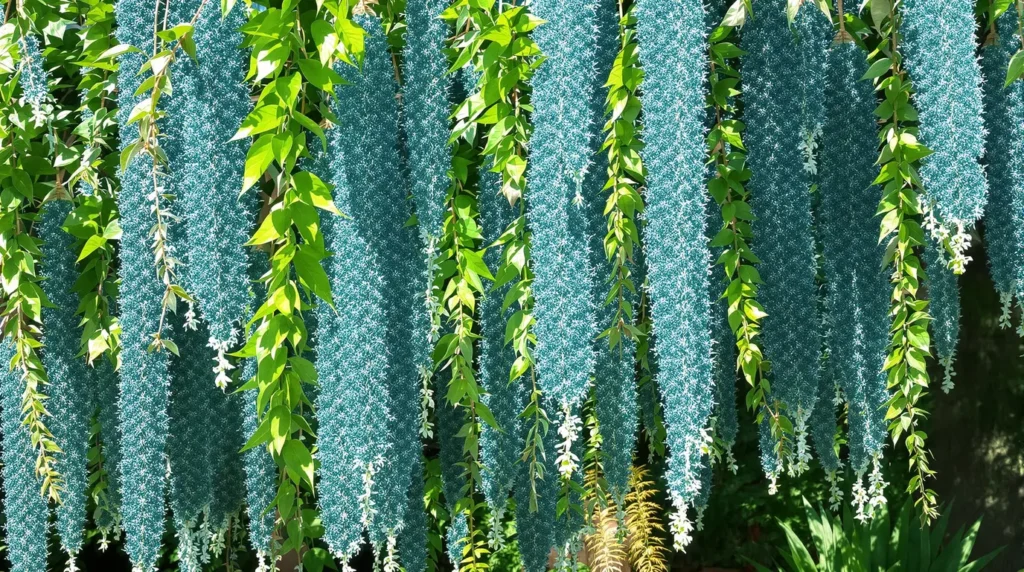
The nickname comes from its striking fruits. In the autumn, this shrub bears elongated pods that boast a nearly turquoise hue. Typically measuring between 2 to 4 inches, when opened, they reveal a gelatinous white pulp and black seeds. The appearance is reminiscent of small sausages or beans, surprising and incredibly photogenic.
Origin and botanical identity
The Decaisnea fargesii hails from the mountainous regions of Asia, found in countries such as China, Bhutan, Nepal, and northeastern India. Its name pays tribute to two French botanists, Joseph Decaisne and Paul Guillaume Farges, who played significant roles in its discovery and subsequent introduction to Europe. In cultivation, it often reaches heights of 6 to 10 feet, while in its natural habitat, it can double that size.
What does the plant look like?
This deciduous shrub has an almost exotic appearance due to its leaves, which can grow up to 35 inches long and consist of about twenty elongated leaflets. In spring, it showcases bell-shaped flowers with a pale yellow hue tinged with green. The fruits emerge in autumn, their vibrant blue caused by anthocyanins, natural pigments also found in blueberries and eggplants.
Can you eat these blue “sausages”?
Indeed, the pulp is edible, characterized by a gelatinous texture and sweet flavor that many liken to melon. In certain regions of Asia, such as among the Lepcha people of Sikkim, it is a regular food source, though elsewhere it remains a curiosity. If you decide to sample it, start with a small portion; the delicate flavor and surprising texture might take you aback.
Easy cultivation and care
The Decaisnea fargesii thrives in sunny or partially shaded locations and prefers fresh, light, well-drained soil, as it does not tolerate standing water. Its hardiness is a real asset, withstanding temperatures as low as -4°F. The shrub typically begins to bear fruit about 3 to 4 years after planting and is not particularly susceptible to diseases. Maintenance usually involves watering during dry spells, and a light pruning is sufficient to maintain a balanced shape.
Practical planting tips
– Choose a sunny or semi-shaded spot for planting.
– Ensure the soil is well-drained; avoid heavy clay soils.
– Space the plants about 6 to 10 feet apart to allow for growth.
– Water regularly during the first year; thereafter, only during prolonged dry spells.
– Seed propagation is possible; while it requires patience, it is generally successful.
A friend to biodiversity
In the garden, the Decaisnea fargesii attracts pollinators with its clustered flowers, and birds are drawn to its fruits. Beyond its decorative appeal, it contributes to local wildlife. Planting a Decaisnea adds a touch of wonder while supporting garden fauna.
Why you should consider it
If you are in search of a plant that surprises, withstands cold temperatures, and requires minimal care, the Decaisnea fargesii checks all the boxes. Its blue fruits promise an impressive visual impact, and for those adventurous enough to try them, the chance to savor a unique and sweet pulp awaits. So, what do you think? Are you tempted to add this extraordinary shrub to your garden?