
How to grow flavorful tomatoes with ease
Do you dream of growing tomatoes that burst with flavor and require minimal effort? By making a few simple adjustments today, you can transform your harvest. Follow these clear and practical tips to strengthen your plants, increase productivity, and reduce the risk of disease.
Origins, varieties, and surprises
Tomatoes belong to the Solanaceae family and hail from the highlands of Central and Andean America. Arriving in Europe during the 16th century, they were initially regarded as a curiosity before becoming a staple in gardens everywhere. With an astonishing variety of shapes, colors, and sizes, tomatoes range from tiny cherry varieties weighing just a few grams to massive specimens exceeding a kilogram.
Typically, their flowers are yellow and self-fertilizing. However, optimal fruiting requires suitable climatic conditions, sometimes assisted by insects or a little human intervention.
Preparing the soil and planting correctly
To ensure success, start with a light, well-draining soil rich in organic matter. Loosen the soil deeply without mixing its layers. Incorporate mature compost and a small amount of well-decomposed manure into the mix.
When planting, add a handful of this mixture into each hole along with a small amount of roasted horn meal. Some gardeners also include fresh, non-flowering nettles to stimulate growth.
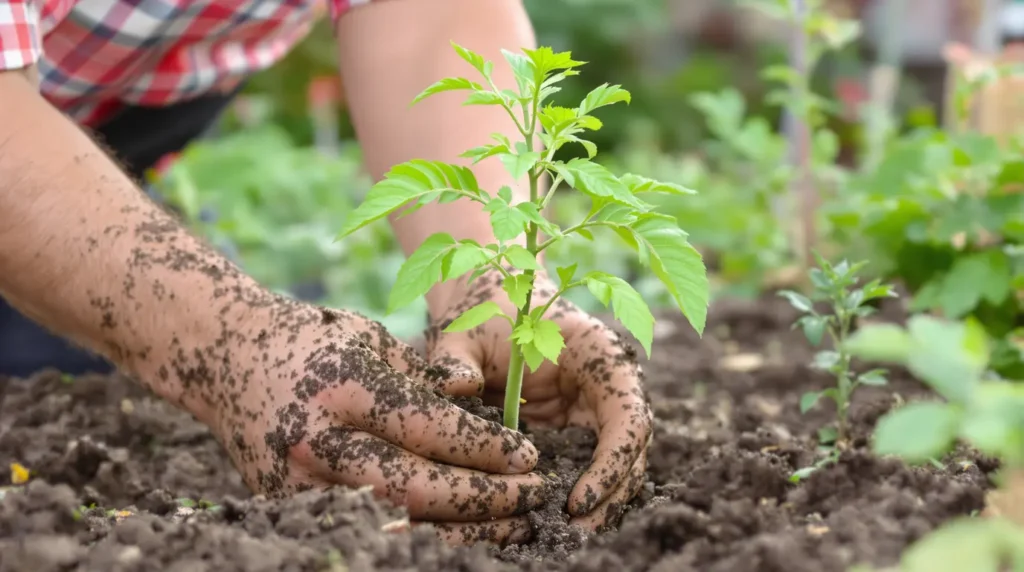
Plant deeply, burying the stem up to the first set of leaves. For grafted plants, ensure the graft point is at soil level. After planting, provide a thorough watering at the base, known as “plombage”, to ensure optimal contact with the substrate.
When to plant and spacing guidelines
In temperate climates, you can safely plant starting mid-May. For early crops in a sheltered environment, mid-April is an option. Acclimate young plants by exposing them to the outdoors for a few days before planting.
Maintain proper spacing: approximately 70 cm between rows and 50 cm within the row. This arrangement promotes air circulation and helps limit diseases.
Daily maintenance: watering, mulching, and pruning
Water at the base, ideally with warm rainwater. Avoid very cold water, as it can inhibit calcium absorption and lead to issues like blossom end rot. If this occurs, a localized watering with diluted whole milk (1 part milk to 10 parts water) may provide temporary relief.
Fifteen days after planting, perform light weeding and apply a 5 cm layer of mulch. Remove lower leaves on two levels to reduce the risk of blight. For indeterminate varieties, stake them, remove suckers, and prune the main stem after the fourth or fifth flower cluster. Determinate varieties require less intervention.
Is staking necessary?
In smaller gardens, staking is nearly essential to manage space and facilitate harvesting. If you have larger areas or options like straw bales, you may allow certain varieties to sprawl on the ground.
Monitoring for diseases and pests
Common diseases to watch
The most feared is blight (Phytophthora), which presents as translucent spots on leaves and a white downy growth beneath. Treat affected areas by removing and destroying them. For prevention, spray a sodium bicarbonate solution (approved for organic gardening) after rain, and apply a moderate fertilizer such as nettle tea every two weeks if needed. Avoid excessive use of Bordeaux mixture.
Other common diseases include alternaria, cladosporiosis, and bacterial canker. Keep an eye out for concentric spots, wilting, or necrosis on stems, and do not save seeds from affected plants.
Pests and infestations
Numerous insects target tomatoes: aphids, whiteflies, cutworms, Colorado potato beetles (watch out if you’re growing potatoes nearby), leaf miners like Tuta absoluta, and stink bugs that pierce the fruit. Slugs and snails particularly threaten young plants.
The best practice is to promote biodiversity, use nets as necessary, and eliminate minor infestations. Crop rotation and maintaining a clean garden greatly reduce pest attacks.
A simple recipe: tomato-mozzarella salad
To immediately enjoy your beautiful tomatoes, try this easy and quick recipe:
– 4 ripe tomatoes
– 200 g mozzarella
– A few basil leaves
– 2 tablespoons olive oil
– 1 tablespoon balsamic vinegar
– Salt and pepper
Slice the tomatoes and mozzarella. Arrange them alternately on a plate. Scatter the basil leaves on top, drizzle with olive oil and balsamic vinegar, and season with salt and pepper. Serve chilled.
Quick tips for maximizing your harvest
– Choose the right planting time based on your climate.
– Prepare the soil and incorporate well-decomposed compost.
– Thin out the plants with light pruning and respect spacing.
– Water at the base with warm water and use mulch to retain moisture.
– Keep an eye on blight and pests: prevention is always better than intensive treatment.
Do you have specific questions about your tomatoes? Maryse Friot, president of the Horticultural Society of Touraine, is available to provide tailored advice every Saturday at 9:30 AM at 02.47.38.10.20. Don’t hesitate to call for guidance suited to your garden!