
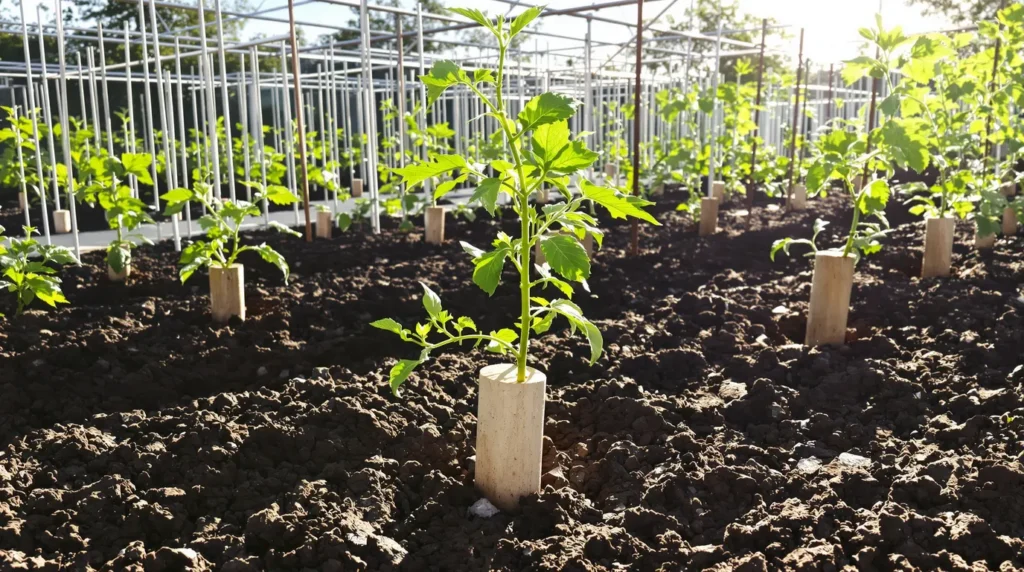
Springtime questions: to stake or not to stake your tomatoes
Every spring brings with it the same dilemma for gardeners: should you install stakes at the time of planting or wait for the plants to grow? The answer isn’t always straightforward, but one guiding principle prevails: it’s often better to anticipate staking to protect your plants and facilitate a smoother growing season.
Why staking tomatoes is essential
Tomatoes are robust plants, with indeterminate varieties reaching heights of 5 to 6.5 feet. Without support, their stems tend to sag to the ground, creating an environment ripe for stagnant moisture and soil splashes. These conditions heighten the risk of diseases like blight. A stake keeps the plant upright, promoting better air circulation and allowing the leaves to dry more quickly after dew or rain.
Advantages of staking at planting time
- Root Preservation: Installing the stake before the root system expands prevents damage to the roots, leading to faster growth.
- Enhanced Stability: When driven into soft soil, the stake anchors deeply, providing better resistance against wind and the weight of the fruit.
- Easier Training: You can guide the main stem from its earliest growth stages, resulting in a more consistently upright plant.
- Time Savings: Setting up supports during planting avoids the need for an additional task later in the season, which can often be hectic.
When You can wait to stake
There are instances where you might delay staking. Determinate or dwarf varieties typically reach heights of only 2 to 3 feet, and their bushy growth makes them less reliant on substantial stakes. Metal cages or self-supporting spirals can be installed shortly after planting if they don’t require deep anchoring. Additionally, some permaculture practices allow tomatoes to sprawl over thick mulch, although this method demands generous mulching and careful monitoring for diseases.
Choosing the right stake for your variety
- Individual Stakes: Wooden, bamboo, or metal stakes are ideal for indeterminate varieties grown on a single stem.
- Metal Spirals: Convenient for guiding the stem without ties, these are a suitable compromise for medium-sized varieties.
- Cages or Wire Cylinders: Surround the plant and support the foliage, commonly used for crops that don’t require intensive pruning.
- Tipi or Row Systems: Useful for aligned plantings, these require sturdy anchoring and proper tensioning.
How to properly stake at planting
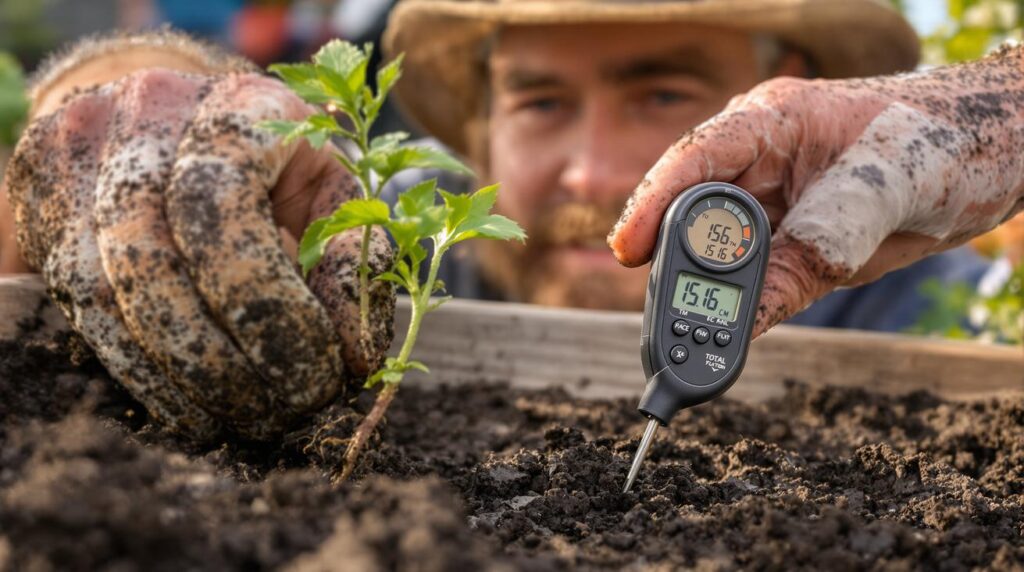
- Positioning: Place the stake 2 to 4 inches away from the plant, positioning it opposite the prevailing winds to minimize friction.
- Anchoring: For a stake that is 6 feet tall, drive it at least 12 to 16 inches into the ground. A solid anchor prevents the support from toppling under the weight of the fruit.
- Ties: Use soft materials such as raffia, rubber ties, or fabric strips. Attach loosely to avoid compressing the stem.
- Progressive Training: Guide the stem and secure it regularly as it grows. This practice prevents breakage and maintains good airflow.
Impact of early staking on plant health and yield
Staking your tomatoes right at planting reduces soil splash, minimizing the spread of spores and blight. Improved air circulation around the foliage allows leaves to dry more quickly after rain. Additionally, it makes it easier to prune suckers, resulting in a clearer plant structure. The outcome? Cleaner fruit, simpler harvesting, and often a more abundant yield.
Practical tips and common mistakes
Never position the stake too far from the plant; too close risks root damage, while too far limits effective guidance. Avoid using rigid ties to secure the plant, as they can constrict the stem over time. Finally, remember to check the tension of your supports mid-season; stakes can shift after heavy rains, and a small adjustment is preferable to a forced replanting.
In summary
If your goal is a smooth growing season and healthier plants, install stakes at the time of planting. In specific cases, waiting may be acceptable, but proactive staking is the most reliable strategy for safeguarding your tomatoes and optimizing your harvest.