
Transforming Mango into a caramel delight
Imagine slicing into a ripe mango and suddenly being enveloped by the sweet aroma of caramel wafting through your kitchen. This delightful transformation is not only surprising but utterly delicious. With just a hot pan and a few simple techniques, you can turn this luscious fruit into a melt-in-your-mouth dessert in mere minutes.
Why does Mango take on a caramel flavor?
The magic lies in a straightforward chemical reaction. The natural sugars present in the mango, along with a touch of brown sugar, caramelize under heat, releasing aromas reminiscent of caramel, cookies, and candy. The role of fat is crucial here; whether you choose plant-based butter or coconut oil, it enriches the flavor. In the pan, the flesh becomes tender, the juices concentrate, and a golden syrup forms.
Ingredients for caramelized Mango (serves 1-2)
– 1 ripe mango (approximately 350g)
– 6 teaspoons of brown sugar (around 30g)
– 1 tablespoon of plant-based margarine (approximately 10g) or 1 tablespoon of coconut oil (about 12g)
– ½ teaspoon of cinnamon (adjust to taste)
– A pinch of fine salt (optional)
– ½ lime (optional)
– ½ teaspoon of vanilla extract or seeds from ¼ of a pod (optional)
Step-by-Step guide to perfect caramelized Mango
Choose the Right Mango: Select a mango that yields slightly to pressure and has a fragrant aroma. Avoid ones that are too firm, as they will be fibrous, or too ripe, as they may become mushy.
Prepare the Mango: Cut the mango along the pit to create two cheeks. Score the flesh in a grid pattern without piercing the skin. This will allow the sugar and syrup to penetrate.
Add Sugar and Flavorings: Sprinkle the brown sugar over the scored flesh. Lightly massage it with the back of a spoon to help the sugar seep into the cuts. If desired, add cinnamon and vanilla for an extra layer of flavor.
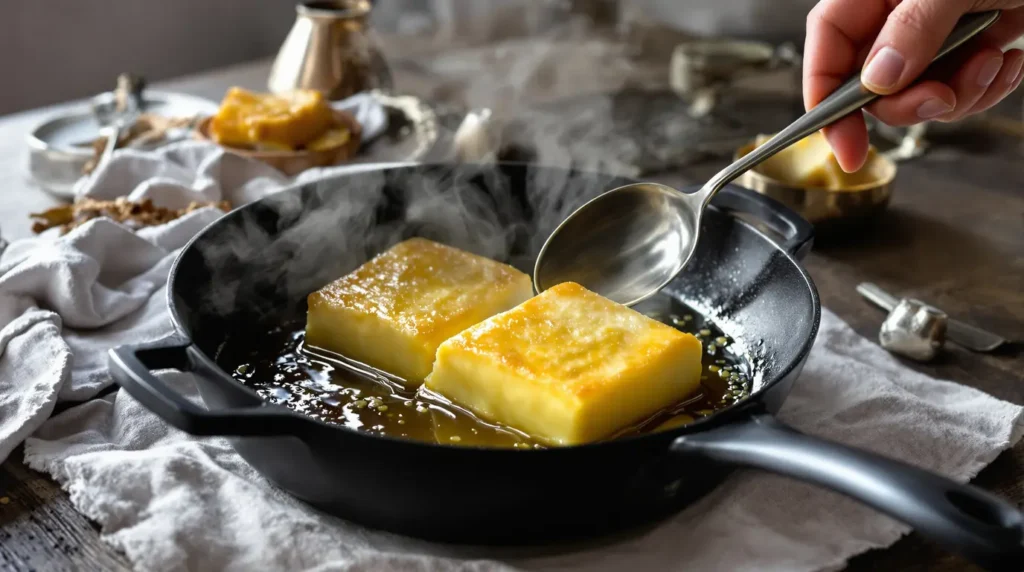
Heat the Pan: Warm the margarine or coconut oil over medium heat. The pan should be hot but not scorching. Place the mango flesh-side down in the pan and refrain from moving it. This stillness is key for proper caramelization.
Caramelize: Allow the mango to cook for 2 to 4 minutes, depending on the ripeness of the fruit and the heat intensity. Watch for the edges to turn golden. If you prefer, flip it skin-side down for the last 30 seconds to warm without drying out.
Finish the Dish: Stop cooking as soon as the flesh is tender and the juices become syrupy. A squeeze of lime at the end brightens the flavors and adds contrast.
Common mistakes to avoid
Too High Heat: A blazing fire will scorch the sugar before it has a chance to caramelize. Maintain a medium heat and show a little patience; the sugar should melt and brown gradually.
Overdoing the Sugar: A light layer of sugar is sufficient. Excess sugar can stick to the pan and develop a bitter taste.
Moving the Mango: Do not disturb the mango while it cooks. Just place it in the pan and wait for the crust to form without agitation.
Using an Under-ripe Mango: An insufficiently ripe mango lacks sweetness and can be dry. Opt for one that is soft and fragrant for a tender, flavorful result.
Serving suggestions to elevate the dessert
Serve the mango warm, drizzled with its caramelized juices. Simplicity shines when paired with a cup of coffee or black tea. The warm-cold contrast is irresistible when accompanied by a scoop of vanilla ice cream.
For a lighter option, consider coconut yogurt. To add crunch, sprinkle some granola or crushed cookies on top. A pinch of salt and a citrus zest can enhance the balance of flavors.
If you’re aiming for a bistro-style presentation, you can flambé the dish without alcohol. Heat some orange juice and pour it over the mango just before serving for a glossy finish and a burst of citrus aroma.
Variations and ideas to explore
This technique is also delightful with peaches, nectarines, or pineapple. Adjust cooking times according to the firmness of the fruit; peaches usually require a similar duration, while pineapple may need closer attention due to its higher water content.
As for accompaniments, think about pairing it with fresh whipped cream, light chantilly, or fresh herbs like mint. A surprising savory twist, such as a sprinkle of Espelette pepper, can add an unexpected yet pleasant touch.
With a ripe mango, a bit of brown sugar, and the right pan technique, you can create a golden, melt-in-your-mouth dessert that is both fragrant and delicious. Give it a try today, and you’ll be amazed at the caramel aroma that fills your home.