
Do you enjoy desserts that tell a story as rich as their flavor?
The baba au rhum is a perfect example of this. Originating from an intuition in Alsace, embraced by the royal court, and sold for nearly 300 years in a Parisian shop, this soaked cake continues to captivate.
Who was Nicolas Stohrer, the inventor of baba au rhum?
Nicolas Stohrer was born in 1706 in Alsace and apprenticed in Wissembourg, where he worked for Stanislas Leszczynski, the King of Poland. He initially crafted an enriched brioche, dousing it with Malaga wine, flavoring it with saffron, and serving it with pastry cream and raisins.
In Calvados, at Géfosse-Fontenay, the only 100% French farmed salmon thrive.
Weekly menu from March 9 to 15, 2026: spring flavors to savor each day
“These won’t turn brown anymore”: my simple technique for keeping your bananas fresh longer.
The King named this creation “Ali-baba.” When Marie Leszcynska, Stanislas’s daughter, married Louis XV in 1725, Nicolas accompanied her to the Court of Versailles. This era introduced new ingredients, making rum accessible through trade with the Caribbean. Stohrer replaced the wine with rum, giving birth to the baba au rhum we know today.
Experts in longevity affirm: this dessert boosts life expectancy and combats disease
I no longer make traditional quiche since discovering this vegan version with winter vegetables: creamy, easy, and irresistibly egg- and cream-free!
Butternut gratin with fresh cheese in the oven: a velvety delight, fresh herbs, and cream to warm chilly winter evenings.
The historic shop at the heart of Paris
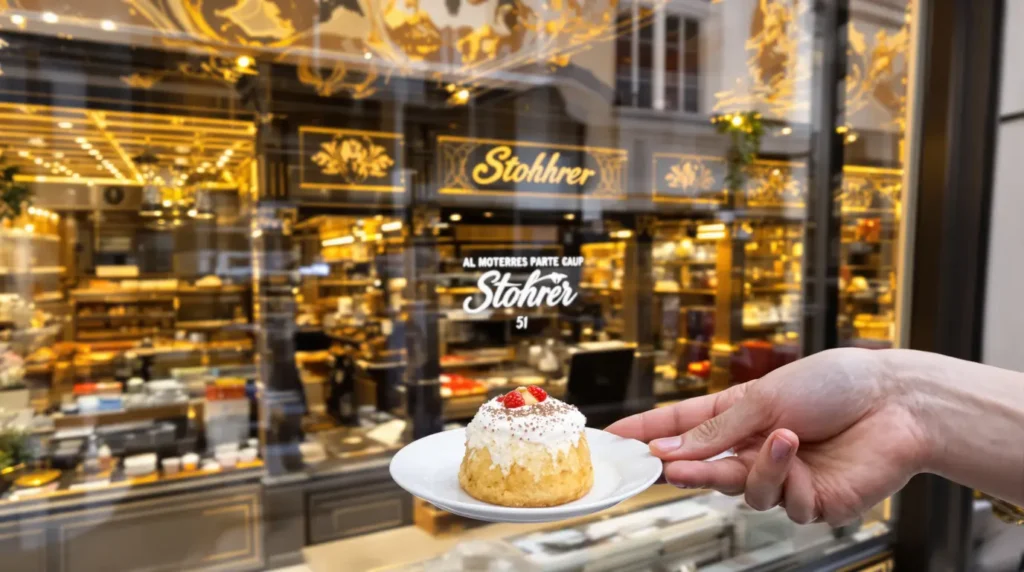
In 1730, Stohrer opened his pastry shop at 51 rue Montorgueil, in a lively district rich in food markets. The shop still exists today, adorned with decorations by painter Paul Baudry and classified as a historical monument. Here, you can purchase babas made according to the traditional recipe.
What makes baba au rhum endure through the centuries?
The contrast between a light dough and fragrant syrup is immediately appealing. Its individual portions make the dessert intimate yet festive. It is versatile; served plain, with whipped cream, or filled with pastry cream. Its simple, adaptable recipe contributes to its longevity.
Moreover, the story adds allure. Knowing the dessert stems from a royal anecdote transforms each bite into a cherished memory. Stohrer’s shop embodies this living history, a rarity and a treasure.
Simple baba au rhum recipe (serves 8 small babas)
Here’s an accessible version that remains true to the spirit of this classic dessert, perfect for those wishing to taste it at home.
Ingredients – for the baba dough:
- 300 g of flour
- 10 g of fresh yeast (or 4 g of dry yeast)
- 4 eggs
- 80 g of softened butter
- 50 g of sugar
- 120 ml of warm milk
- A pinch of salt
Ingredients – for the rum syrup:
- 300 ml of water
- 200 g of sugar
- Zest of one lemon
- 1 vanilla bean, split
- 150 to 200 ml of rum (to taste)
To serve (optional):
- 250 ml of heavy cream for whipped cream
- 2 tablespoons of powdered sugar
- A few raisins or fresh fruit
Preparation:
In a bowl, dissolve the yeast in the warm milk and let it rest for 5 minutes. Combine the flour, sugar, and salt. Add the eggs, then the milk with the yeast. Knead until you achieve a soft dough. Incorporate the softened butter in pieces and knead for another 5 to 10 minutes until the dough is elastic and slightly sticky.
Allow the dough to rise for 1 hour at room temperature, covered with plastic wrap. Punch down the dough and divide it into baba molds, filling them two-thirds full. Let them rise for another 30 to 45 minutes.
Preheat the oven to 180 °C (350 °F). Bake for 15 to 20 minutes, depending on their size, until golden brown.
Prepare the syrup by bringing the water, sugar, vanilla, and zest to a boil. Simmer for 5 minutes, then remove from heat and stir in the rum.
Unmold the warm babas and immerse them in the hot syrup, allowing them to soak for a few minutes, flipping them occasionally. Serve warm with sweetened whipped cream or pastry cream, garnished with raisins or fruit.
Visit maison Stohrer today
If you find yourself in Paris, the shop at 51 rue Montorgueil remains an iconic destination. Here, you will discover pastries that honor tradition, set in a decor reminiscent of the 19th century. The location is steeped in history, offering a culinary and visual experience not to be missed.
Baba au rhum is more than just a cake; it is a bridge connecting Alsace, Poland, the French Court, and the Caribbean. It embodies the daring spirit of a pastry chef who skillfully blended ingredients and curiosity. Taste it, and you will understand why it has endured through the ages.
About the author
Emma Bellanger is an expert in French gastronomy and culinary news, passionate about the world of flavor. She guides food enthusiasts in discovering authentic recipes and trends. Emma combines in-depth knowledge, a keen eye for new developments, and insightful advice to offer a selection of enriching content suitable for both culinary amateurs and professionals.