
Craving sugar-coated donuts like those at the fair, but without the frying or lingering smells?
This baked version is simple, fluffy, and features a surprising little trick that delights with every bite.
Why choose baked donuts over fried ones
Switching from frying to baking simplifies the process and reduces oil absorption. Your kitchen stays tidy, and you avoid the hassle of monitoring a pot of hot oil.
A spring favorite: “pure velvet” asparagus risotto with parmesan
Here’s a budget-friendly Mediterranean dinner I prepare every week.
The latest food trend: a two-ingredient Japanese cheesecake
The result retains the soft center of traditional donuts thanks to a dough that rises twice. The sugary finish creates that beloved sweet crust.
Ingredients for a delightful batch (about 12 donuts)
– 300 g all-purpose flour
– 100 ml milk (dairy or plant-based)
– 7 g dried yeast
– 1 egg
– 2 tablespoons granulated sugar
– 1 packet of vanilla sugar
– ½ teaspoon salt
– 20 g softened butter
For finishing: a plate of cold water and a plate of granulated sugar
Step-by-step preparation
Begin by activating the yeast: mix the yeast with the flour in a large bowl. Beat the egg and set it aside.
Sift the sugar and gently heat the milk with the sugar and butter until just warm. Gradually pour the milk over the flour while adding the egg. Add the salt last.
Knead until you achieve a soft dough that pulls away from the sides. Form a ball, cover with a cloth, and let rise for 1 hour in a warm place. The dough should almost double in size.
Gently deflate the dough, roll it out on a floured surface, and use a glass or cookie cutter to cut out circles. Place the rounds on a baking sheet lined with parchment paper. Cover and let rise for another 45 minutes.
Preheat the oven to 180 °C (350 °F). Bake the donuts for 10 to 14 minutes, depending on your oven. They should be golden and still soft to the touch.
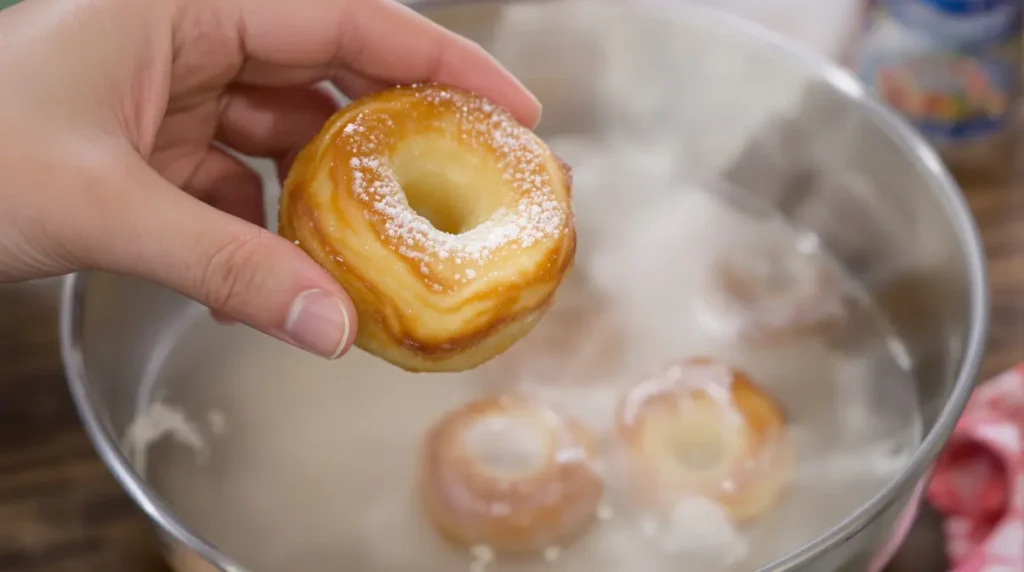
Remove the donuts from the oven and, while they are still warm, quickly dip them in cold water and then roll them in sugar. This technique creates a delicate, delicious sugary crust that surprises with every bite.
Tips for perfectly golden and fluffy donuts
If you prefer a deeper color, lightly brush the donuts with a bit of milk before baking. This aids in caramelization without adding fat.
The initial temperature of the milk is crucial: if it’s too hot, the yeast will lose its effectiveness. Warm is sufficient. Work the dough until it’s elastic for an airy crumb.
The cold water finish might seem surprising, but it accelerates the thermal shock and gives that “fair donut” texture after the sugar. You can also replace the water with a light syrup if you prefer a sweeter result.
Variations and indulgent ideas
To flavor the dough, add 1 tablespoon of orange blossom water or the zest of one lemon. You might also consider a pinch of cinnamon.
Feeling overwhelmed? These fast-growing fruit trees can transform your garden into an express orchard.
Baked stuffed mushrooms with garlic and herbs: a warm, melting appetizer
If you prefer filled donuts, allow them to cool, then pipe in jam, pastry cream, or spreadable chocolate using a piping bag.
For a lactose-free version, use plant-based milk. The texture changes very little, and the flavor remains indulgent.
In summary
These baked sugar donuts provide all the nostalgia of childhood treats without the drawbacks of frying. The recipe is accessible, quick to prepare, and adaptable to your cravings. Try it for Mardi Gras or a rainy Sunday, and you’ll impress everyone.
About the author
Emma Bellanger is an expert in French gastronomy and culinary news, passionate about the world of flavor. She guides food enthusiasts in discovering authentic recipes and trends. Emma combines in-depth knowledge, an eye on new developments, and thoughtful advice to curate enriching content tailored to both culinary amateurs and professionals alike.