
Transform your eggplant plants into fruit-bearing machines
Do you dream of seeing your rows of eggplants laden with fruit this summer? With a few precise actions and one key tip, you can significantly increase your chances of achieving a harvest worthy of a nursery. Here’s a straightforward, practical, and proven guide to help you turn your plants into prolific producers.
Choosing the right time to plant
Eggplants thrive in warm climates and are not fond of cold temperatures. Planting too early can expose your plants to stress that they may not recover from. In the U.S., the ideal planting time typically begins around mid-May.
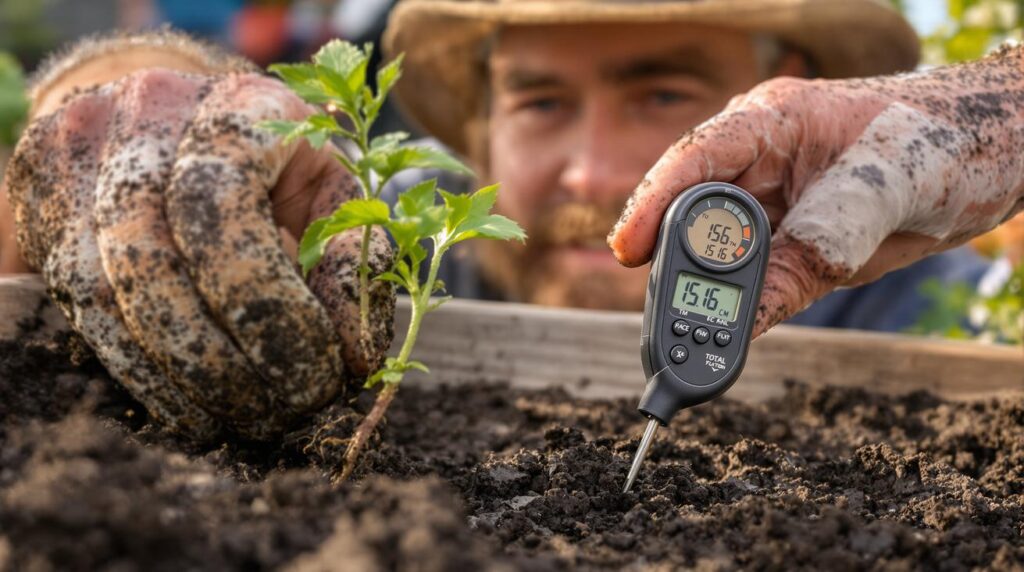
Wait until the risk of frost has passed and the soil has warmed up. Before planting, generously hydrate the root ball. After planting, cover your new seedlings with a protective cloth for 48 hours; this small shield helps the roots establish themselves.
Preparing the soil and location
Position your plants in full sunlight. Without adequate light, flowers can abort. A rich, deep, and well-drained soil encourages heavy, meaty fruits.
Incorporate 3 to 4 liters of well-rotted compost per plant at the time of planting. If you’re using fertilizer, choose a balanced one rich in potassium during the fruiting phase.
Spacing, companion planting, and staking
Space is crucial. A common mistake is to plant too closely together. Leave at least 24 inches between each plant for standard varieties.
A simple yet effective idea: place one eggplant in the center of a raised bed and surround it with four lettuce plants. The lettuce benefits from the shade while the eggplant enjoys a cooler microclimate at its base.
Install stakes or trellises at planting time to avoid damaging the roots later. A sturdy stake or trellis will support the branches laden with fruit.
Pinching: a strategic pruning technique for xXL fruits
For larger fruits, regular pinching is essential. Once the main stem reaches about 16 inches, trim the tip. This encourages the plant to produce more vigorous lateral branches.
Limit production to about four fruits per plant by removing excess flowers. This allows the plant to concentrate its energy, resulting in bigger, denser, and more flavorful eggplants.
Watering and mulching: the golden duo
A lack of water is the number one enemy of eggplant. Water consistently and directly at the base of the plant. Avoid wetting the foliage to reduce the risk of disease.
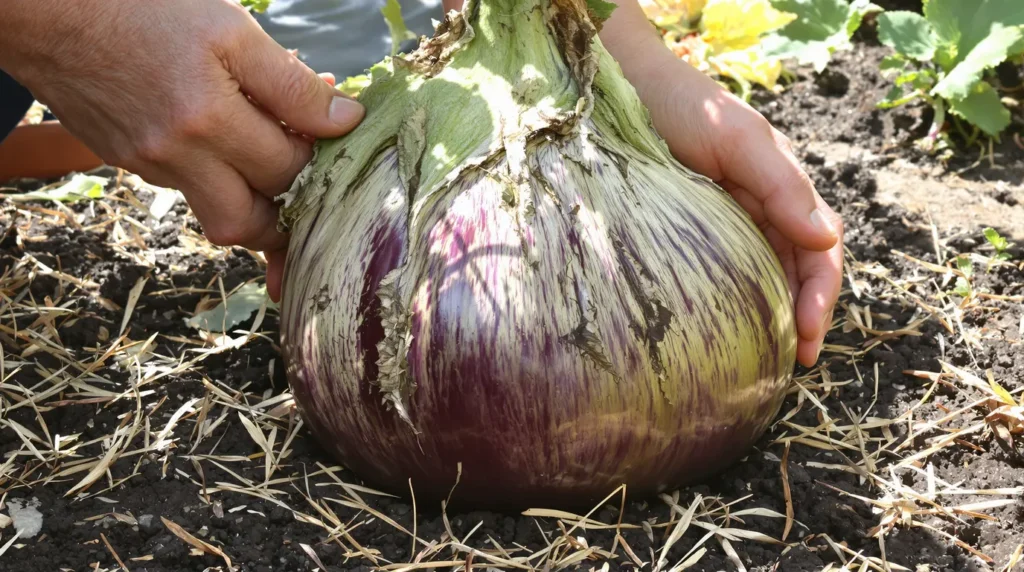
Starting in June, apply a layer of 2 to 3 inches of straw or plant debris around the plants. Mulching retains moisture, reduces evaporation, and suppresses weeds. This combination is a winning strategy for summer.
Harvesting and storage
The reward for your hard work begins in August. Harvest when the skin is smooth and shiny. Don’t rely solely on size; overripe fruits can become bitter.
Use pruning shears to cleanly cut the stem, preserving the plant and preventing damage to young buds. Store eggplants in a cool place for 3 to 5 days, ideally at 50-55°F.
Bonus tip for record harvests
The most effective way to increase viable fruit production is to combine pinching, regular watering, and a potassium boost 3 to 4 weeks after flowering. This trio directs the plant’s energy toward fruiting rather than just leaf growth.
Simple recipe to elevate your harvest
Once you have a bountiful harvest, try this quick and delicious recipe for roasted eggplants.
Ingredients for 4 Servings:
- 3 medium eggplants (approximately 2 pounds)
- 3 tablespoons olive oil
- 2 garlic cloves
- 1 teaspoon salt
- ½ teaspoon pepper
- 1 tablespoon fresh or dried thyme
- 1.5 ounces grated parmesan cheese (optional)
Preparation:
- Preheat your oven to 400°F.
- Slice the eggplants into ½-inch thick rounds.
- In a bowl, mix the oil, pressed garlic, salt, pepper, and thyme. Brush this mixture onto each slice.
- Arrange the slices on a baking sheet lined with parchment paper.
- Roast for 20 to 25 minutes, until golden. If desired, sprinkle with parmesan cheese 5 minutes before the end of roasting.
Conclusion: gardening is action
With proper timing, early staking, strategic pinching, and targeted watering, you can transform finicky plants into generous producers. Growing your own eggplants not only reduces your carbon footprint but also allows you to enjoy sun-kissed, locally grown vegetables. So, are you ready to aim for a record harvest this summer?