
Protect your tomatoes and citrus from heat stress
As the heat of summer approaches, it’s crucial to shield your tomatoes and citrus fruits from the risks of water stress. Luckily, there’s a simple and cost-effective solution: burying bottles near the roots to create a slow-release irrigation system. This method not only protects your plants from shock but also minimizes water loss.
Why this technique works
Watering from the surface often leads to a stark contrast between dry and overly saturated soil, causing stress that can result in leaf drop and hinder flowering. A slow-release system maintains consistent moisture around the root ball, allowing water to seep in gradually. This technique reduces evaporation, ensuring that water reaches the root zone directly, keeping the soil cool and loose for longer periods. Consequently, your plants become more resilient during heat waves.
Materials and recommended volumes
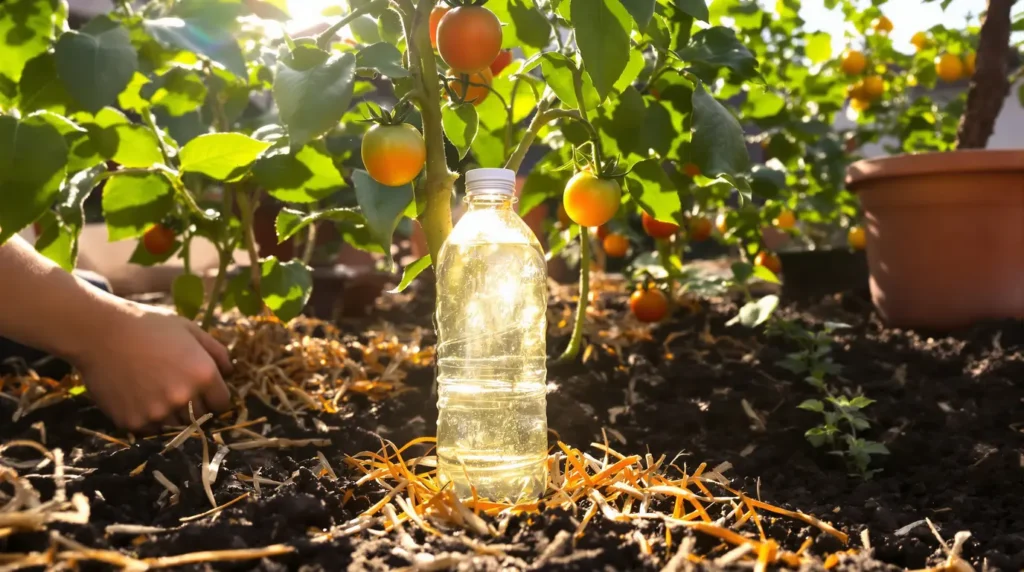
To implement this method, you’ll need minimal supplies. A recycled plastic bottle will suffice; for a vegetable bed, opt for a 1.5-liter bottle, while for a shrub or small citrus tree, a 5-liter container is advisable.
Make several small holes in the lower sides of the bottle. The number of perforations will determine the flow rate; for particularly thirsty plants, you can create up to 10 holes. Ensure the neck of the bottle is level with the soil surface for easy filling and monitoring.
Step-by-Step installation
1. Dig a hole near the root ball, taking care not to disturb the roots.
2. Position the bottle vertically, ensuring the neck is flush with the ground.
3. Puncture several small holes in the buried portion; adjust the number based on the plant’s water needs.
4. Fill the bottle with clean water.
5. Partially screw on the cap to slow the water flow.
6. Surround the neck with a few centimeters of organic mulch.
How much water to expect
A tomato plant can consume up to 2 liters of water every two days during peak heat. Therefore, a 1.5-liter bottle can provide approximately 48 hours of hydration for a single plant under these conditions. For small citrus or shrubs, a 5-liter jug offers a more extended water reserve, with the precise duration depending on factors like wind, heat, and growth stage. Regularly check and adjust as needed.
Tips for maximizing efficiency
Before a long absence, test your setup for two to three days. This allows you to adjust the flow rate and prevent soil saturation. If water drains too quickly, the soil may become oversaturated, risking root rot.
Applying mulch further reduces evaporation, maintaining moisture around the bottle neck and limiting competition from weeds. Moving pots to a shaded area can also decrease water demand.
Plants to avoid and precautions
Avoid using this system for cacti or succulents, as these plants thrive in dry conditions and cannot tolerate constant moisture. Choose your vegetation wisely before installing buried reservoirs.
Exercise caution when digging to avoid damaging the roots. Regularly monitor water levels and adjust the number of holes if your plants exhibit signs of stress.
Conclusion
Burying bottles near the roots is a straightforward and effective method to prepare your tomatoes and citrus for the summer heat. It stabilizes moisture levels, curbs evaporation, and adds convenience during your absences. With just a few bottles and some mulch, you can significantly enhance your plants’ chances of thriving through the summer without the risk of damage.