
Your lemon tree shows signs of life but no fruit?
In March, a small action at the base can make all the difference. It’s simple, low-cost, and easy to execute each month to enhance flowering and fruit set.
Why act specifically in March
March marks the beginning of the growing season. Sap begins to rise, and floral buds form for April and May. Waiting too long means losing this opportunity. Taking action now prepares your tree for a fruitful summer.
Don’t leave parchment paper under your dough
Here’s why that’s not a great idea.
The creamy flan pastry by laurent mariotte: an easy recipe to try at home
Christophe michalak’s crepe batter: no resting, truly light and impressive
An ongoing nutrient supply from March to mid-August yields far better results than a single, massive application. Now is the time to establish a monthly routine.
Unusual garden tip: use this kitchen spice this week to help birds and deter pests
Better than boiling: your green beans taste much better cooked this way
Potato, leek, and carrot gratin: creamy, deliciously golden, and ultra-easy to prepare
The surprising ingredient: banana peels
Surprised? Banana peels are rich in potassium, a nutrient that enhances flowering, flower retention, and fruit quality. While it’s not a complete fertilizer, it serves as a targeted and natural supplement.
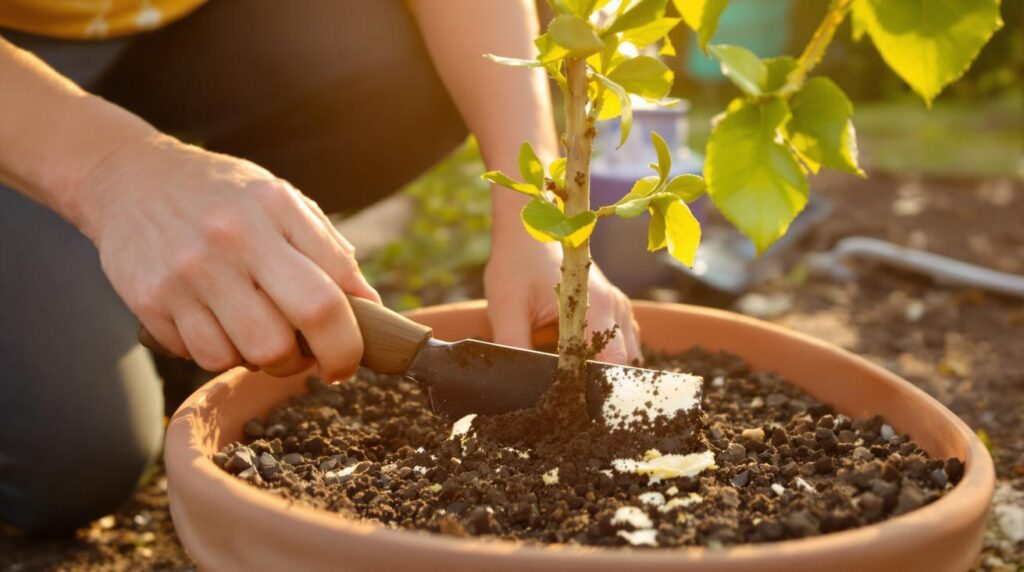
For a pot measuring 30 to 40 cm in diameter, collect the peels from 2 to 3 bananas. Cut them into 1 to 2 cm pieces. Dig 3 or 4 small holes 3 to 5 cm deep and place the pieces 8 to 10 cm from the trunk. Cover with potting soil and water as usual. Repeat this once a month from March until the end of August.
For ground planting in the South, use 4 to 5 finely chopped banana peels. Bury them 3–5 cm below the surface, under the canopy but away from the trunk. Maintain the same frequency: once a month until the end of summer.
Practical tip: bury the pieces well
This minimizes odors and prevents attracting gnats. Avoid overdoing it; excess can ferment and disrupt soil balance.
Essential guidelines to follow
This trick works only if the basics are in place. Your lemon tree needs at least 6 hours of direct sunlight each day. The substrate must be well-draining, so place 3 to 5 cm of clay pebbles at the bottom of the pot.
Water 2 to 3 times a week in spring and summer. During winter, reduce to once every two weeks. In non-Mediterranean climates, keep it in a pot and bring it indoors when nighttime temperatures drop to 5 °C. The ideal indoor environment is bright, with temperatures between 12 and 15 °C.
Perform a light pruning at the end of winter to open up the center and allow more light to penetrate.
Understanding nPK and common mistakes to avoid
A quick recap: nitrogen promotes foliage growth, phosphorus aids rooting and flowering, and potassium strengthens fruit set and quality. Use a citrus fertilizer once a month from March to mid-August, considering banana peels as a targeted supplement.
Say goodbye to heavy cream: the best salmon pasta is made this way
The alsatians prefer this dessert over rice pudding: it’s truly more indulgent
Baked eggs with tomatoes: a simple pantry recipe that becomes my comforting dinner this March
Avoid pouring wet coffee grounds at the base. As they dry, they can form a crust that blocks water absorption. A small tablespoon of wood ash in March can help, but don’t exceed this amount as ash is quite alkaline.
Monitor the foliage: yellow leaves with green veins? This indicates a potential iron deficiency. Too many leaves and few buds? Cut back on nitrogen. If buds are falling, stabilize watering and temperature.
Practical calendar and summary
- March: Start the routine. Apply citrus fertilizer and bury the first banana peel pieces.
- April to August: Repeat the burial of banana peels once a month. Maintain the monthly fertilizer application.
- September to winter: Stop fertilizer applications. Reduce watering and bring the tree indoors if necessary.
With these simple actions, you significantly increase your chances of having lemons all summer long. Try it this month, and you’ll notice the difference in flowering.