
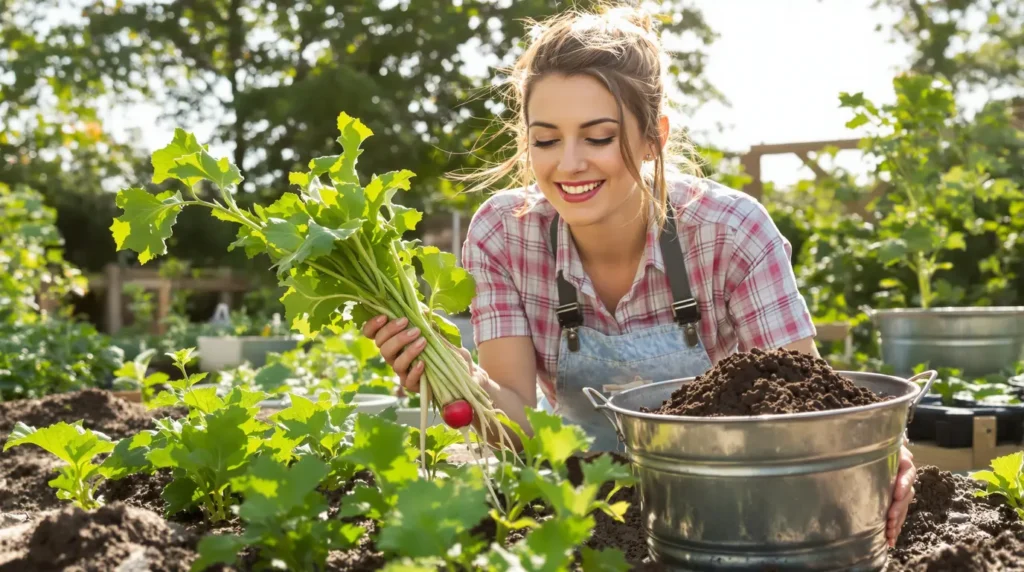
Do you need Fertilizer for your spring radishes?
If you love crunchy radishes in the spring but are unsure whether fertilizer truly enhances your harvest, it’s time to dig deeper. Before pouring in a bag of fertilizer, let’s explore what genuinely helps radish roots flourish and what might ruin your crop.
Should you add Fertilizer to your radishes?
The short answer is: not necessarily. Radishes are quick-growing vegetables that thrive in well-aerated soil rich in organic matter, complemented by consistent watering. An excess of nitrogen can lead to lush foliage at the expense of the root. In most cases, a good compost mix at the time of planting is sufficient.
What radishes really want
Radishes love sunlight and prefer the cooler temperatures of spring and fall. In the summer heat, they tend to bolt or develop bitter, pungent roots. To cultivate optimal radishes, plant them in fresh, well-draining, and loose soil.
Prepare the soil to a depth of 5 to 10 cm, removing stones and clumps. Thin out your seedlings to maintain a spacing of about 3 to 4 cm between each plant. Failing to thin can result in small, misshapen roots.
Watering, Planting, and common mistakes
Water your radishes regularly but moderately. A lack of moisture can lead to a spicy, unpleasant flavor, while overwatering will favor leaf growth over root development. The key is consistency.
Common issues include cracked or fibrous radishes. Cracking often results from irregular watering or overly wet soil after a dry spell. Fibrous roots can arise from compact soil or excessive nitrogen.
Choosing the right Fertilizer if needed
Instead of opting for a generic NPK mineral fertilizer, consider a gentler, organic solution. Mature compost is your best bet, providing essential nutrients and improving soil structure without causing imbalances.
Why avoid excess nitrogen?
Nitrogen promotes leaf growth. For radishes, too much nitrogen means abundant foliage and small, spicy, or fibrous roots. If you notice lush greens but minimal root development, cut back or eliminate nitrogen inputs.
Adding potassium when necessary
Potassium supports root vegetables. However, in most gardens, regular compost application suffices. If your soil is particularly sandy or poor, you may consider a light potassium amendment. Always test your soil before applying chemical fertilizers.
Practical tips and recipes
Here are some simple, reliable actions everyone can take:
Soil Amendment Before Planting: Incorporate about 1 kg of compost per square meter into the soil surface and lightly work it in.
Thinning: Leave one radish every 3 to 4 cm to allow roots to develop properly.
Watering: Aim for 2 to 3 light waterings per week during dry periods, adjusting based on weather conditions.
Homemade Fertilizer: Compost Tea: For a natural boost, create compost tea by steeping 1 kg of mature compost in 10 liters of non-chlorinated water for 24 hours in the shade, stirring once. Strain and dilute the liquid at a ratio of 1 part tea to 5 parts water before watering at the base of your plants. This can be applied at the start and possibly once more during the growing season if the soil is lacking.
Companion Planting and crop rotation
Radishes pair beautifully with lettuce, carrots, peas, beans, and strawberries. For instance, peas contribute beneficial nitrogen to neighboring crops. Avoid replanting root vegetables in the same spot the following year; leave at least two years before returning radishes to the same location.
Conclusion: approach with common sense
Instead of hastily adding fertilizers, focus on preparing loose, compost-rich soil and maintaining consistent watering. If you decide to apply fertilizer, prioritize compost or a light organic amendment. By doing so, you’ll cultivate crunchy, flavorful radishes without risking damage to your plants.