
Beat the heat: grow delicious tomatoes with less water
As the sun blazes down, your lawn may be turning brown and your tomato plants seem to be guzzling every drop of moisture in the garden. However, endless watering is not the answer. Discover simple yet professional techniques to cultivate luscious tomatoes while conserving water, even during the hottest days of summer.
Why daily watering weakens your plants
Watering every day creates a surface layer of moisture that encourages roots to stay shallow. As a result, your plants become fragile, struggling to cope with any interruption in water supply. A little drought stress can actually enhance sugar concentration, leading to more flavorful tomatoes. Yet, if water scarcity becomes too severe, fruit production diminishes, and the tomatoes remain small. The solution is straightforward: water less frequently but more deeply.
When and how to water for maximum efficiency
Water your plants early in the morning or late in the evening to minimize evaporation. Aim to keep the foliage dry, as plants absorb water through their roots, and wet leaves can promote disease. Focus on localized, gradual watering at the base of each plant. During hot spells, a schedule of watering every two to three days is often preferable. As a guideline, provide about 3 to 6 liters of water per plant when the soil is very dry, adjusting based on soil type and plant size.
Prepare a living soil for better water retention
Before planting, invest time in enriching your soil. A compost-rich mix can retain moisture and nourish roots effectively. Treat your soil as a living ecosystem, not just an inert substrate. Earthworms, fungi, and microorganisms do the heavy lifting for you, protect them by reducing tilling and increasing organic matter. A vibrant soil can endure dry spells and lessen the need for frequent watering.
Mulching: your shield against evaporation
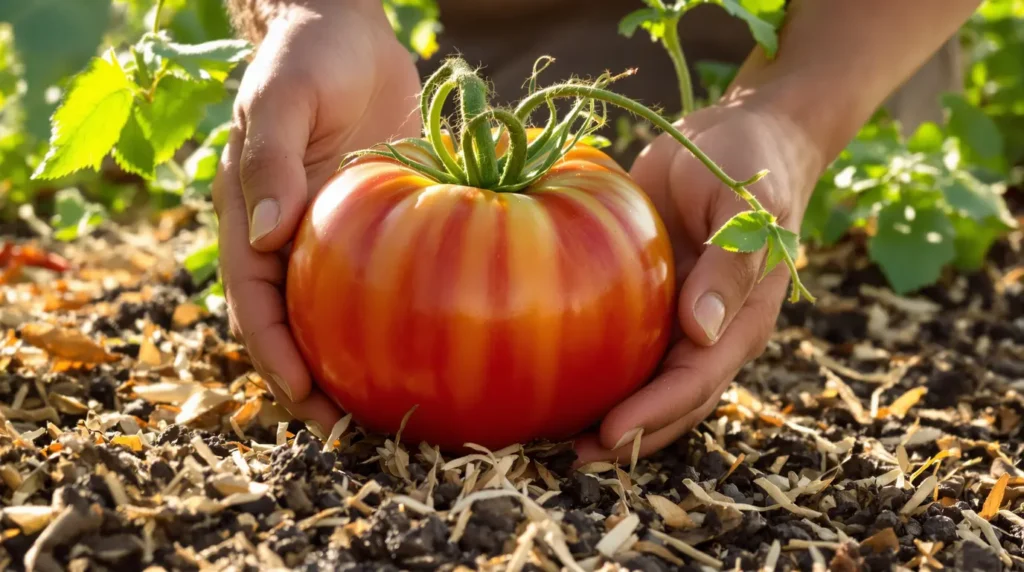
Mulching is one of the most effective and simplest methods to retain water. A layer of mulch reduces evaporation, stabilizes soil temperature, and, as it decomposes, enriches the soil. The Ademe recommends a mulch thickness of 3 to 5 centimeters, slightly more for dead leaves. Use well-dried grass clippings, leaves, straw, wood chips, or dried clippings, each material has its unique benefits, so select what’s available to you.
Select heat-resistant tomato varieties
Not all tomato varieties thrive under drought conditions. Some are more resilient and maintain superior flavor even with limited water. The TomSec project led by Inrae highlights this promising avenue. Among the varieties known for their drought resistance, the Black Crimea offers a sweet flesh and holds up well against dry spells, while the Mexican Honey tomato is another robust choice for hot gardens. If the planting season has passed, consider saving some seeds for next year.
Efficient watering techniques and tools
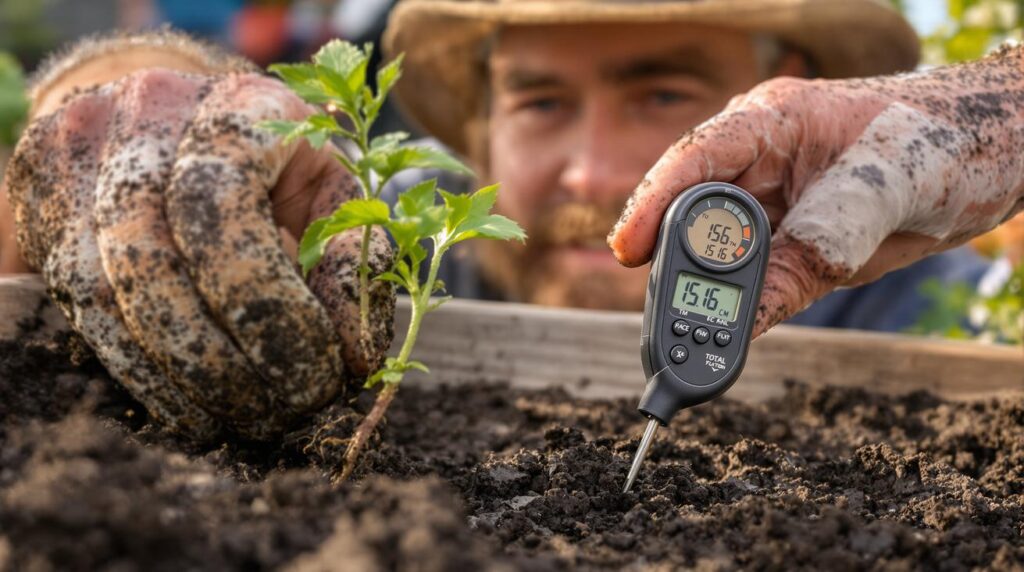
Several solutions simplify deep watering: drip irrigation systems, porous hoses, or long-spouted watering cans. These methods direct water precisely to the roots, preventing waste. To check soil moisture, use the finger test: insert your index finger about 2 inches into the soil. If it feels damp, hold off on watering. If it’s dry, water deeply and slowly so the moisture penetrates thoroughly.
Simple seven-point action plan
1. Amend the soil with 2 to 3 centimeters of compost before planting to enhance retention.
2. Apply a mulch layer of 3 to 5 centimeters around the plants as soon as possible.
3. Water at the base, avoiding foliage, during early morning or evening hours.
4. In hot weather, water every 2 to 3 days, providing approximately 3–6 liters per plant based on soil and size.
5. Install a drip irrigation system for slow, targeted watering.
6. Choose heat-resistant varieties like Black Crimea or Mexican Honey.
7. Protect soil life: limit excessive tilling and promote organic matter additions.
With these straightforward practices, you’ll cultivate more flavorful tomatoes and robust plants while conserving water. Try out one or two of these techniques this week, and you’ll notice the difference at your next watering session.